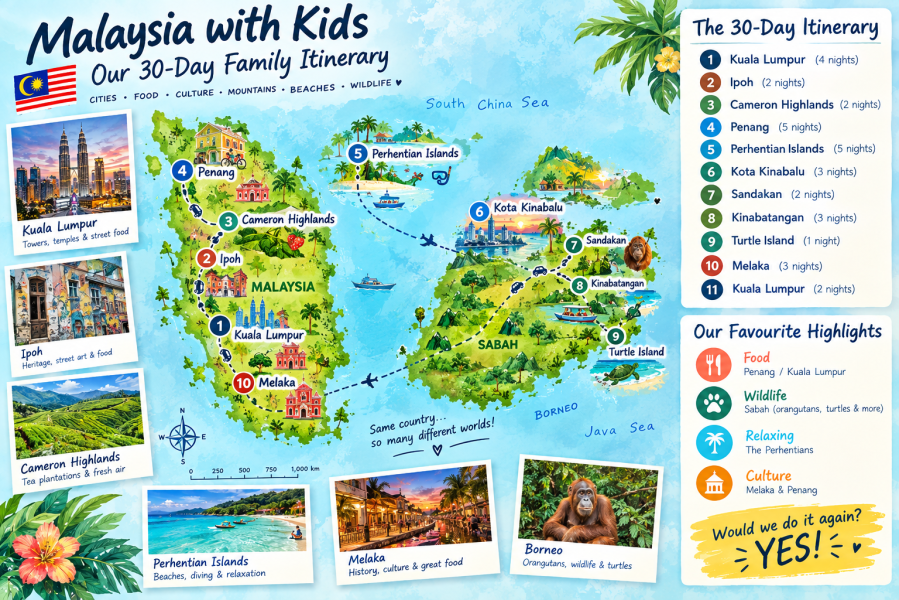
Is Malaysia a good destination for a family holiday? After spending 30 days travelling around the country with our children, we think it is one of the most rewarding family trips we’ve taken.
Malaysia gave us an unusual combination of experiences in one trip: lively cities, incredible food, historic towns, tea plantations, tropical islands, beaches, rainforest and some of the most memorable wildlife encounters we’ve had as a family.
Our 30-day Malaysia itinerary took us from Kuala Lumpur to Ipoh, Cameron Highlands and Penang, then across to the Perhentian Islands before continuing to Sabah in Malaysian Borneo. We finished the trip with a few days in Melaka before returning to Kuala Lumpur.
It was a long trip, but one of the things we loved most about Malaysia was how much variety we could build into it.
We could spend one day exploring temples and street art, the next eating our way through a food market, then slow everything down on a tropical island before heading into the rainforest to look for orangutans and pygmy elephants.
If you’re considering Malaysia with children, here’s how we did it, what we loved, and what we’d recommend from our own experience.
Is Malaysia good for families?
Yes — particularly if your family enjoys variety rather than spending an entire holiday in one place.
Our children were able to experience completely different types of travel during the same trip.
There were easy wins such as water parks, beaches, swimming pools and ice cream, but also experiences that gave them an introduction to Malaysian culture, food, history and wildlife.
We climbed the 260 steps to the Batu Caves, explored the forests of Kuala Lumpur, hunted for strawberries in Cameron Highlands and rode the funicular up Penang Hill.
We ate our way through street markets and food tours, explored the heritage streets of George Town and stayed in a very simple island resort where the main entertainment was the beach.
And then, in Borneo, the trip changed completely.
We watched orangutans swinging through the trees, searched for wildlife along the Kinabatangan River, saw proboscis monkeys, crocodiles and hornbills, and watched tiny turtles make their way towards the sea.
That variety was one of the things that made Malaysia such a good family destination for us.
Our 30-day Malaysia itinerary
We spent a full month in Malaysia, but we didn’t spend the whole time moving every day.
Our itinerary looked like this:
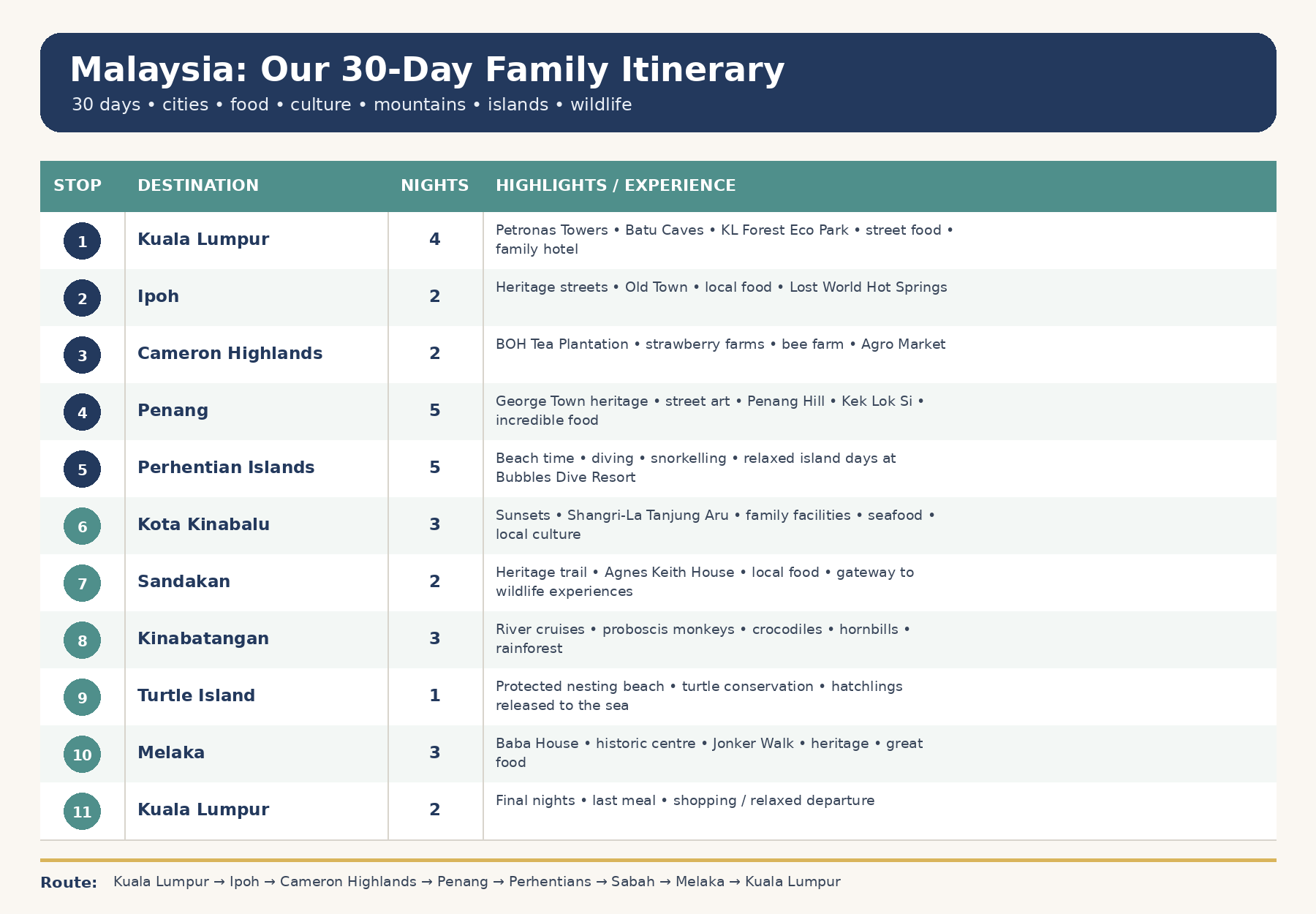
This wasn’t intended to be a fast-paced “tick every attraction off the list” itinerary.
We deliberately built in slower sections — particularly the five nights on the Perhentian Islands — before moving into the more adventurous Borneo part of the trip.
Kuala Lumpur with kids
We started our Malaysian adventure in Kuala Lumpur, spending four nights at the beginning of the trip before returning for another two nights at the end.
KL was a good introduction to Malaysia because there is an enormous amount to do without needing to travel far outside the city.
Where we stayed
Our first hotel was the Shangri-La Kuala Lumpur, which turned out to be particularly well suited to travelling with children.
Our family room had a separate children’s sleeping area complete with a little camping tent, chocolate crayons and lemonade waiting for them.
The hotel also offered children’s activities at weekends, including treasure hunts, quizzes, arts and cooking activities. Our children joined an arts class and cupcake decorating.

There was also a pool, garden and koi pond, while the club-level afternoon tea gave us a useful opportunity to slow down after arriving in Kuala Lumpur.
For parents, that combination was useful: we could have a relatively relaxing hotel day without feeling that we’d sacrificed the holiday experience.
Petronas Towers
The Petronas Towers were our first major Kuala Lumpur attraction.
We hadn’t managed to find tickets online beforehand, so we went in person and managed to get tickets for later that day.
The visit takes you first to the Skybridge before continuing to the observation deck on the 86th floor.
For us, going close to sunset worked particularly well. We could see Kuala Lumpur in daylight, then watch the city begin to light up.
Jalan Alor and Kuala Lumpur’s food scene
Food became a recurring theme throughout our Malaysia trip, and Kuala Lumpur was our first real introduction to the country’s incredible variety.
We visited Jalan Alor Food Market, where restaurants and food stalls take over the street in the evening.
We also did a dedicated Kuala Lumpur food tour, trying everything from roti canai and cendol to satay, nasi kandar, assam laksa, beef noodle soup and the famous Ramly burger.
[LINK: Coming soon — Our Kuala Lumpur & Penang Food Guide]
Batu Caves
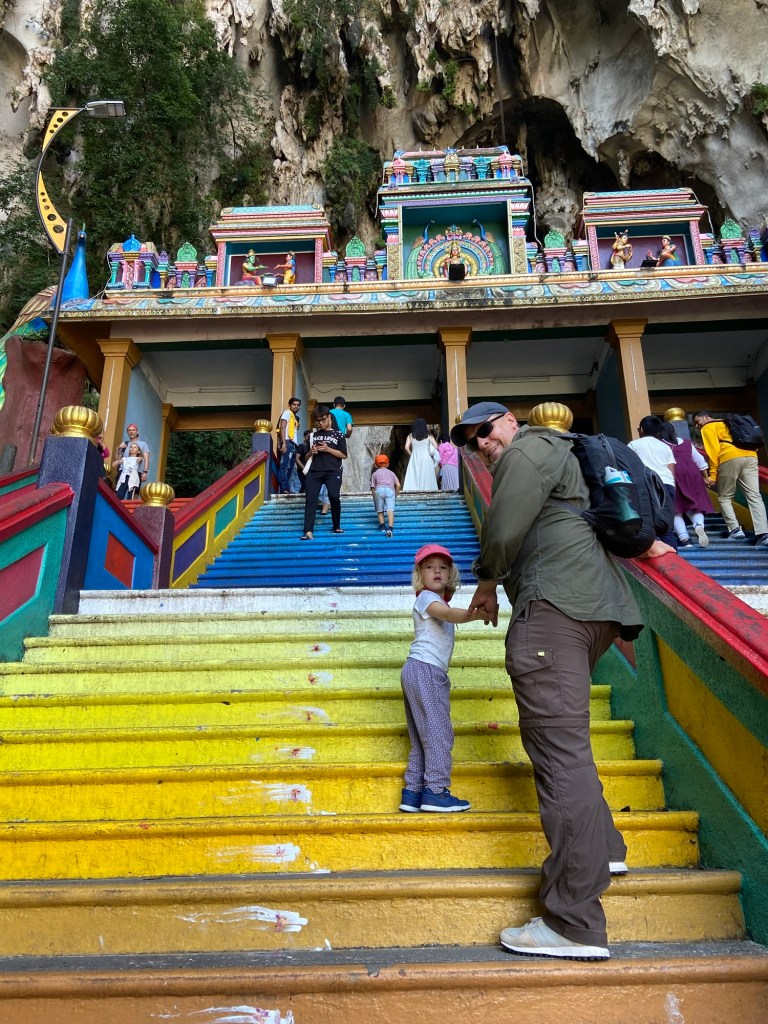
Another Kuala Lumpur highlight was Batu Caves, around 40 minutes outside the city.
The colourful Hindu temple complex sits inside a limestone cave, reached via a long staircase of 260 steps.
Our children enjoyed the climb, the cave itself and — perhaps unsurprisingly — spotting the monkeys.
It is one of those attractions that combines culture, nature and a little bit of adventure, which made it particularly good for our family.
KL Forest Eco Park
For something completely different, we headed into KL Forest Eco Park.
The park provides an unexpected patch of rainforest in the middle of Kuala Lumpur, with canopy walks and trails.
After the busy city streets, it was a welcome change of pace — and a reminder that you don’t always need to leave a major Malaysian city to experience nature.
Sunway Lagoon
If your children need a day where the focus is simply on having fun, Sunway Lagoon is another option.
It’s a combination of theme park, water park and other attractions, and our children particularly enjoyed the water slides.
We didn’t take the camera into the water park, but it was one of those days where putting the camera away was probably the right decision anyway.
Ipoh with kids
From Kuala Lumpur we drove to Ipoh, where we spent two nights.
Ipoh was one of the places on our itinerary that made us wonder why it doesn’t receive more attention from international family travellers.
The city has a much slower pace than Kuala Lumpur, a compact historic centre, plenty of food and some fun family activities.
We stayed at Travelodge Ipoh, with views across the low-rise city towards the mountains.
Exploring Ipoh’s heritage centre
We started at the railway station and followed the city’s historic centre through its old buildings, lanes and street art.
Market Lane, Concubine Lane and Wife Lane gave us plenty of opportunities to wander, stop for food and explore without following a rigid sightseeing schedule.
Ipoh’s street art isn’t as famous internationally as Penang’s, but we actually found it very enjoyable to explore with children.
Ipoh food
Food is one of Ipoh’s great attractions.
We tried local white coffee, egg tarts, curry buns, noodle soups and a variety of local snacks.
The city’s white coffee is particularly famous, and trying the local version became part of our morning routine.
Lost World of Tambun
Our favourite family activity in Ipoh was probably the evening at the Lost World Hot Springs.
After spending the hottest part of the afternoon back at the hotel, we headed there in the evening.
There were numerous pools, slides, food stalls and areas to explore, and the atmosphere changed completely once it became dark and the lights came on.
For us, it was a great example of why Ipoh works well on a family itinerary: you can spend the day exploring the city, then finish with something children will genuinely be excited about.
Cameron Highlands with kids
From Ipoh we continued into the Cameron Highlands, where we stayed for two nights.
After the heat of the cities, the cooler hill climate was welcome, and the landscape became dominated by tea plantations and green hills.
We stayed in a British cottage-inspired hotel and arranged a local driver to take us around the main sights.
Tea plantations
The BOH Tea Plantation was one of the highlights.
We toured the factory, learned a little about how tea is produced and enjoyed the views across the plantation.
Of course, the children were also interested in the tea-inspired treats.
Strawberry picking
For families, strawberry picking is an easy activity to add to a Cameron Highlands itinerary.
The children were given baskets and scissors and could pick the strawberries themselves before eating some of them.
It was simple, but it worked.
Bee farm and Agro Market
We also visited a bee farm, where the children could explore the gardens and try honey-based treats.
The Agro Market was another colourful stop, with gardens, flowers, animals and various photo opportunities.
Our children particularly enjoyed the miniature Santorini area — although the adults may have appreciated the tea and scones afterwards more.
Is Cameron Highlands worth visiting?
For us, yes — particularly as a two-night break between the hotter lowland destinations.
We wouldn’t necessarily recommend trying to see every attraction. The real appeal was the combination of cooler temperatures, mountain scenery, tea plantations and a slower pace.
Penang with kids
We then drove to Penang, where we stayed for five nights.
Penang was one of our favourite stops on the entire trip, and it’s somewhere we’d happily return to.
The combination of George Town’s heritage, incredible food, street art and nearby nature makes it particularly easy to build a varied family itinerary.
Staying in George Town
We stayed in a beautifully restored heritage property made up of old Chinese shophouses.
Our suite had a small terrace overlooking the historic buildings, and its central location made it a particularly good base for exploring George Town on foot.
George Town’s food scene
If Kuala Lumpur introduced us to Malaysian food, Penang took it to another level.
We spent an entire day exploring George Town through food, including Little India, street stalls and local institutions.
Among the dishes we tried were:
- roti
- samosas
- char koay teow
- duck noodles
- nasi kandar
- assam laksa
- cendol
- ice kachang
And that’s only a selection.
[LINK: Coming soon — KL + Penang Food Guide]
The food is a major reason we’d return to Penang.
Penang Hill
When we needed a break from the heat and food, we headed to Penang Hill.
The funicular ride up is part of the experience, and once at the top there are trails, viewpoints and a noticeably cooler climate.
It was a very easy family excursion from George Town.
Kek Lok Si
We combined Penang Hill with Kek Lok Si, one of the most impressive Buddhist temple complexes we saw during our trip.
The scale, colours and views made it an especially memorable cultural stop.
Street art and the Clan Jetties
Back in George Town, we spent another morning exploring the street art and the communities built over the water.
The Clan Jetties gave us another glimpse of a very different side of Penang.
We deliberately went early because some of the walkways are narrow and the area is still a residential community rather than simply a tourist attraction.
Would we recommend Penang for families?
Absolutely.
It has enough food, culture, nature and things to explore to fill several days without requiring long journeys every day.
Five nights on the Perhentian Islands
After Penang, we flew to Kota Bharu, the gateway to the Perhentian Islands for five nights at Bubbles Dive Resort.
After several weeks of driving, sightseeing and eating our way through Malaysia, we wanted somewhere where we could simply slow down before the next major adventure.
Bubbles Dive Resort
Bubbles is not a luxury beach resort — and that’s important to understand before booking.
Our four-person family room was basic, but we weren’t there to spend time in the room.
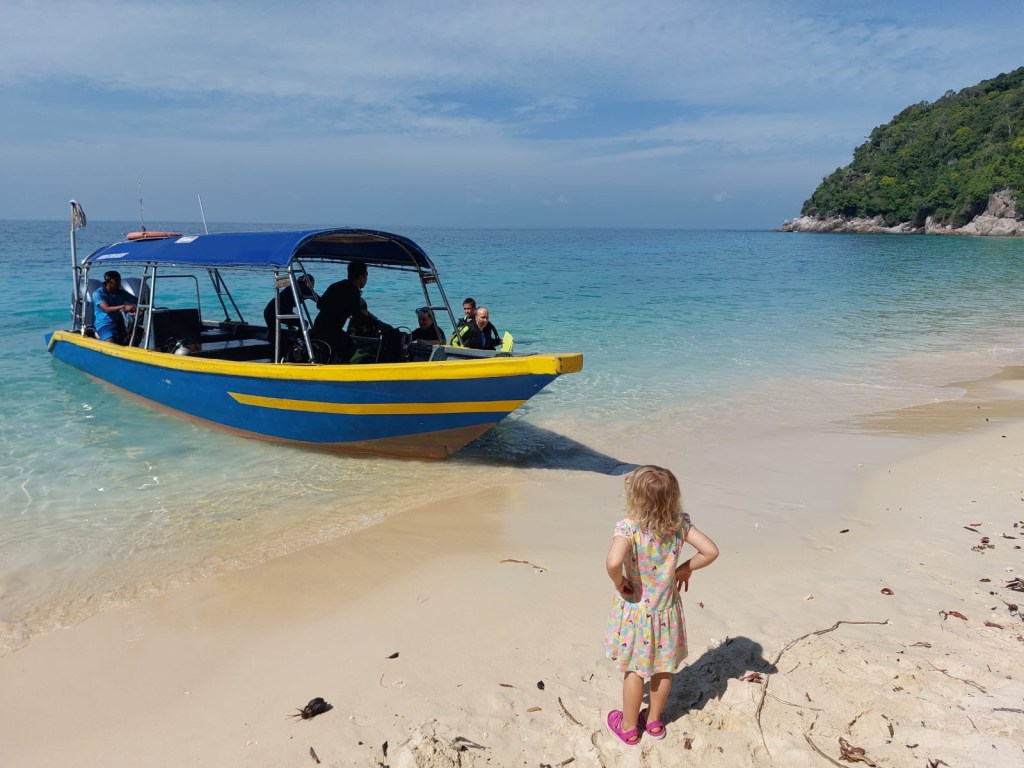
The resort is centred around its beach, water and diving.
The resort offers diving, snorkelling, kayaking, paddleboarding, hiking and conservation activities. It is also home to a turtle conservation project.
Our five days on the island
While the adults took turns going diving, the children spent their time playing on the beach and in the shallow water.
The meals were included and we found them very tasty, which made the simplicity of the accommodation much easier to embrace.
This was probably the slowest part of our entire month in Malaysia.
And that was exactly why we needed it.
After five nights on the Perhentians, we were ready for the next chapter:
Borneo.
Malaysian Borneo: the wildlife adventure
From Kota Bharu we flew to Kota Kinabalu, beginning the most adventurous part of our Malaysia itinerary.
If the first half of our trip was about cities, food, culture and beaches, Sabah was about wildlife.
And it delivered far more than we expected.
Kota Kinabalu
Our first three nights were in Kota Kinabalu at Shangri-La Tanjung Aru.
The resort gave us another chance to slow down before heading into the rainforest.
The children loved the water park, including the slides and giant bucket, while we enjoyed the beach and the famous Borneo sunsets.
We also explored Kota Kinabalu itself, including a local dance performance and the night market.
The seafood market was particularly fun because you choose the seafood yourself and then have it cooked for you.
Sandakan
From Kota Kinabalu we flew to Sandakan.
We spent time exploring the city, including the Agnes Keith House, the heritage trail and local cafés.
But Sandakan was really our gateway to the wildlife experiences we had come to Sabah to find.
Orangutans and sun bears
The first major wildlife stop was Sepilok, where we visited the orangutan rehabilitation centre and the Bornean sun bear conservation centre.
Seeing an orangutan in Borneo is difficult to describe until you’re actually standing there watching one move through the trees.
The experience also gave us the opportunity to learn about the conservation work behind the scenes rather than simply treating the animals as another tourist attraction.
The Kinabatangan River
From Sandakan we continued towards the Kinabatangan River and stayed at Sukau Rainforest Lodge.
River cruises became the best way to explore the rainforest.
Our first cruise was rainy, but that didn’t make it any less exciting.
We saw:
- proboscis monkeys
- crocodiles
- hornbills
- other birds
- and plenty of forest that looked as though something could appear around every corner.
The following morning we were out on the river again — very early.
And that early start paid off.
We saw proboscis monkeys moving through the trees and calling to one another.
We were also hoping to see Bornean pygmy elephants, but they didn’t cooperate with our plans.
That’s part of wildlife travel.
You don’t get to choose what appears.
And that uncertainty is part of what makes it so exciting.
Turtle Island
Our next stop was completely different.
We travelled to Selingan, Turtle Island, where we stayed overnight.
Only a limited number of visitors can stay on the island, and the experience is carefully controlled because it is a protected turtle nesting area.
And then came one of the most memorable moments of our entire month.
Tiny turtles had hatched and were being released towards the sea.
Watching our children’s reaction as they saw them for the first time was something we will remember for a very long time.
It was one of those travel experiences that couldn’t really be replicated by watching it on a screen.
Melaka with kids
After our Borneo adventure, we flew back to Kuala Lumpur and drove to Melaka, where we spent three nights.
After the rainforest and wildlife of Sabah, Melaka brought us back to history, architecture, food and walking through an old city.
Staying at Baba House
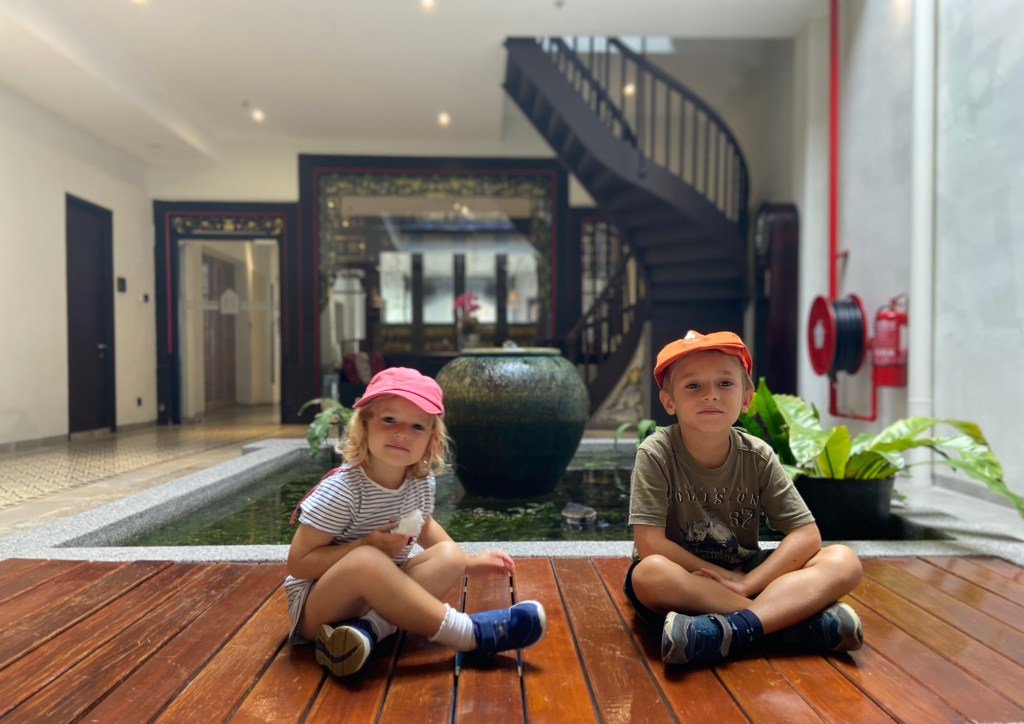
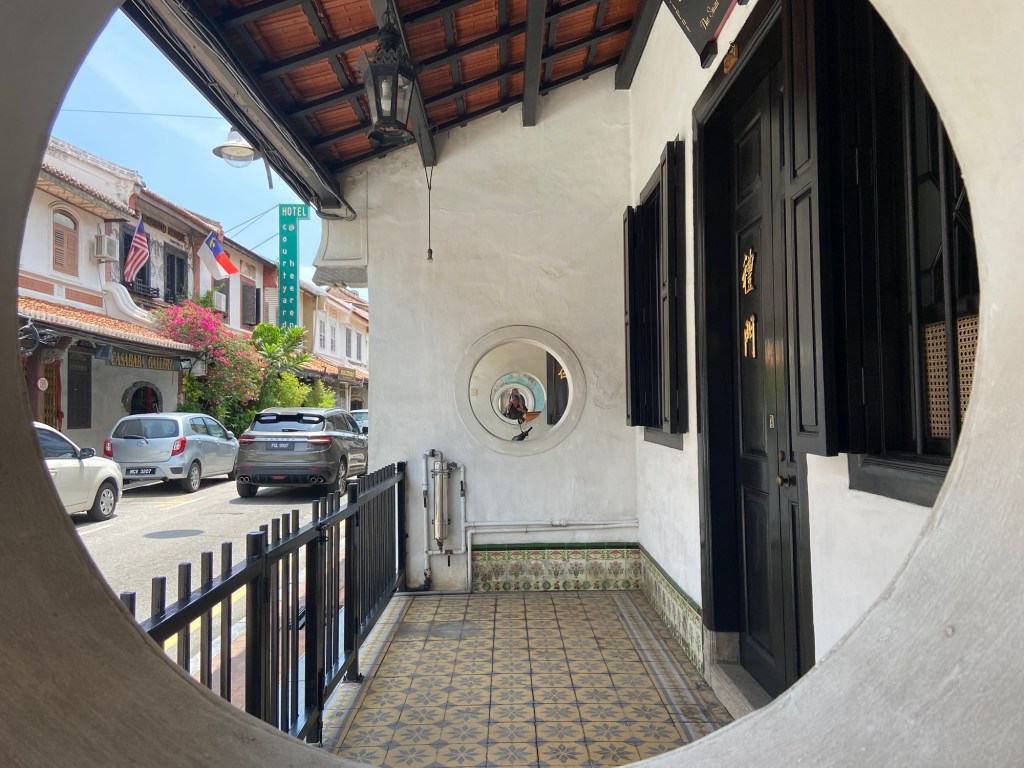
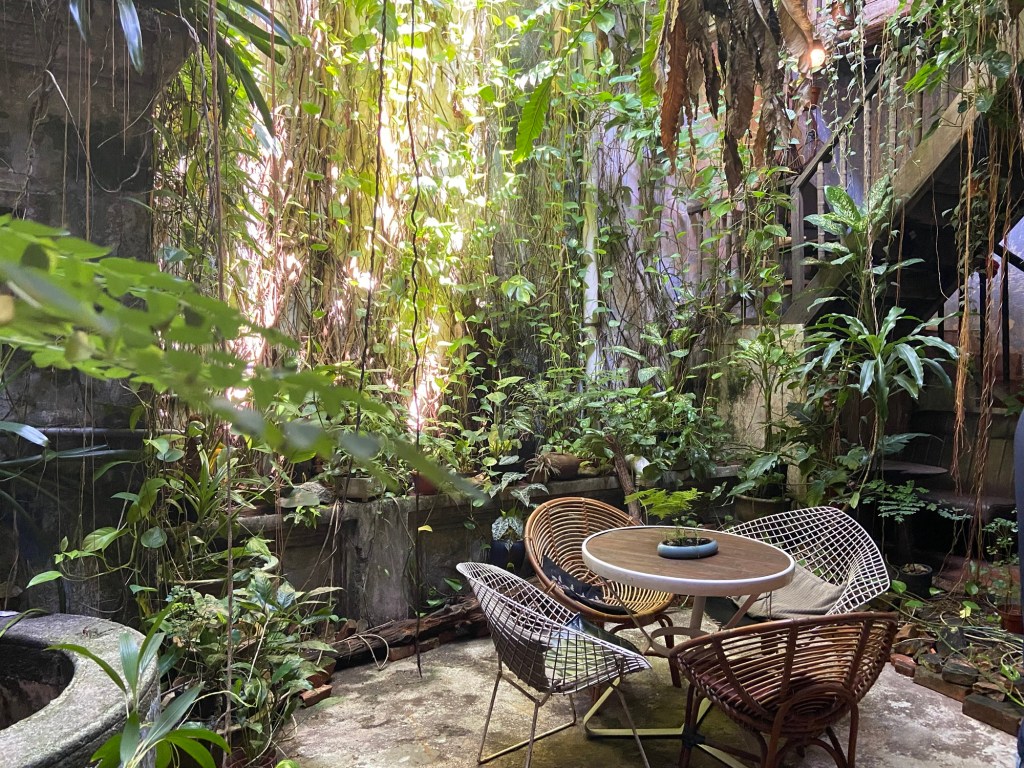
We stayed at Baba House, a beautifully restored heritage property in the heart of Melaka’s historic area.
Its Peranakan-inspired interiors and attention to detail made the hotel feel like part of the experience rather than simply somewhere to sleep.
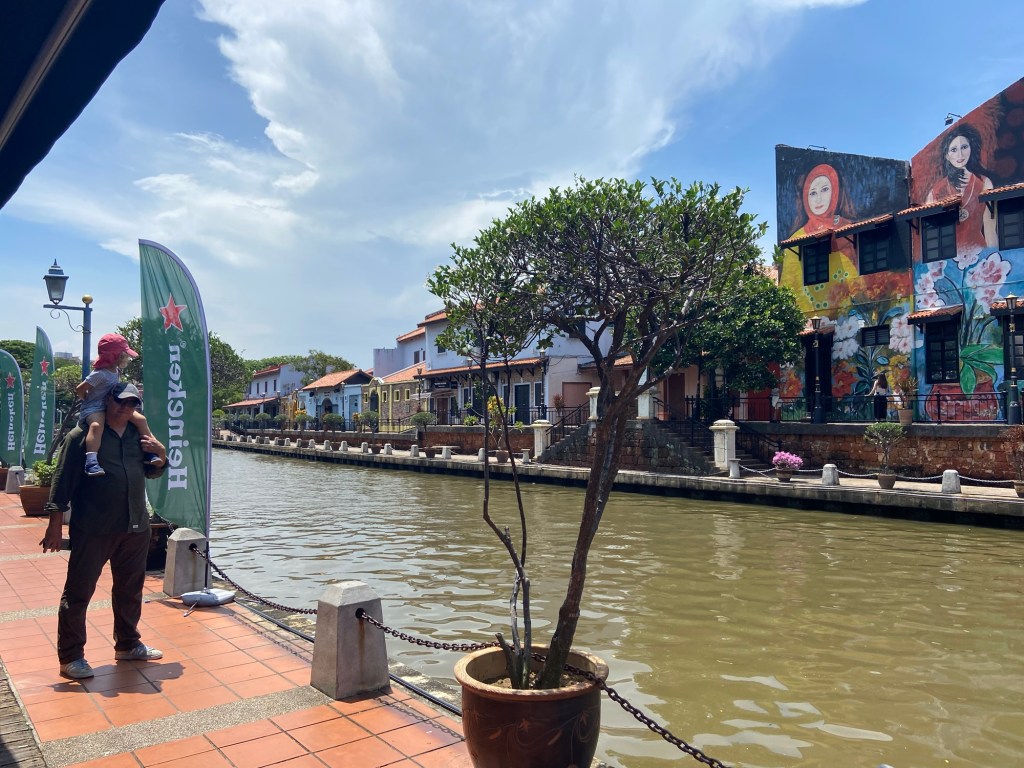
Its location was particularly convenient: Jonker Walk, the Stadthuys, the Melaka River, the Baba-Nyonya heritage museums and Cheng Hoon Teng Temple are all within the surrounding heritage area.
One detail we particularly enjoyed was the movie nights in the garden.
Exploring Melaka on foot
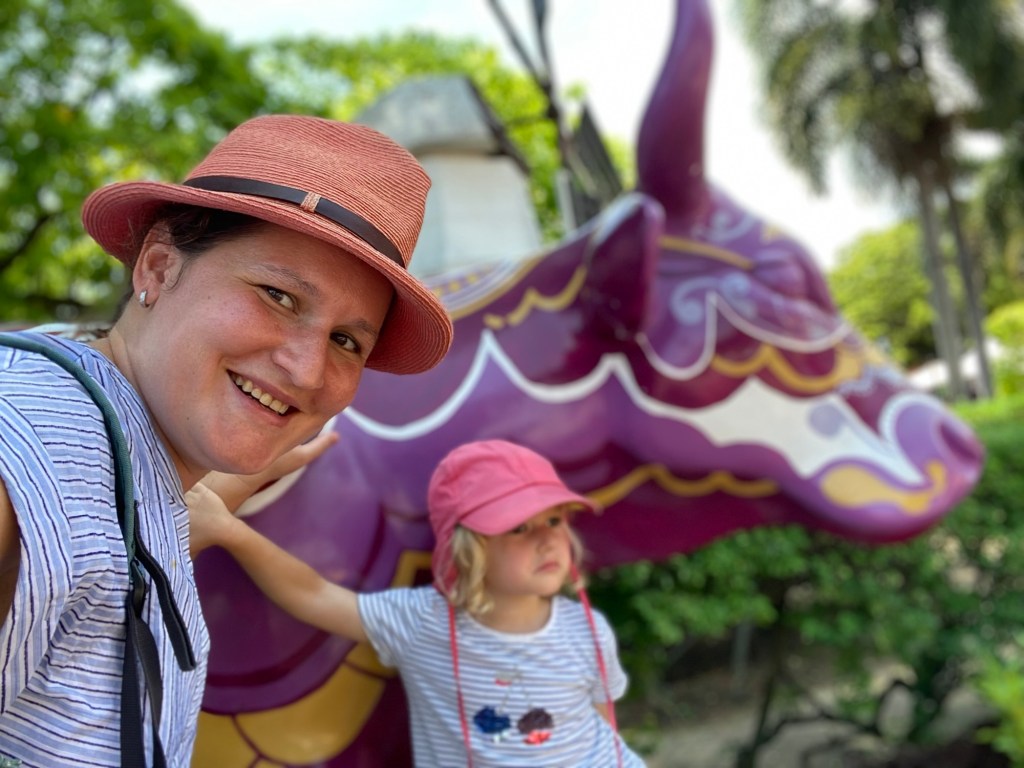
We spent our time simply walking around the historic centre and visiting the main sights.
The compact heritage core makes Melaka relatively easy to explore without constantly getting into a car.
The obvious highlights include:
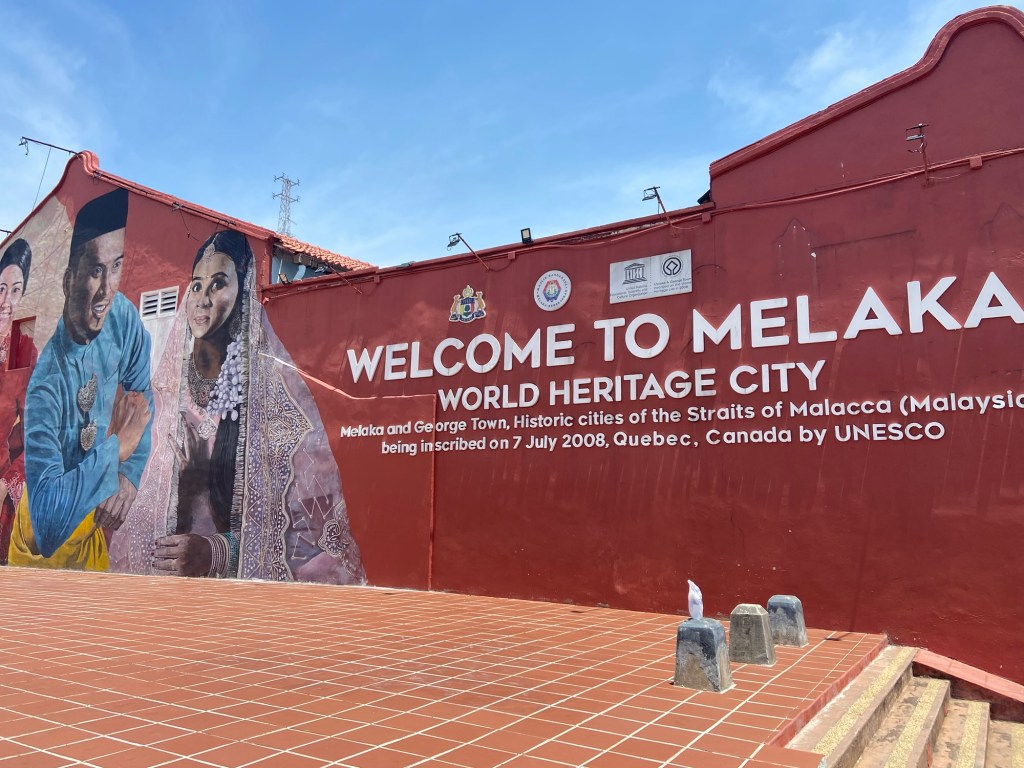
- Dutch Square and the red Stadthuys
- St Paul’s Hill
- A Famosa
- Jonker Street
- the Baba-Nyonya heritage area
- Cheng Hoon Teng Temple
- the Melaka River
The heritage centre is compact enough to explore on foot, although the heat means that families will probably appreciate breaking the day up rather than trying to see everything at once. Current local guides also recommend combining the heritage sights with a river cruise or other shorter activity to give children a break from walking.
Where we ate
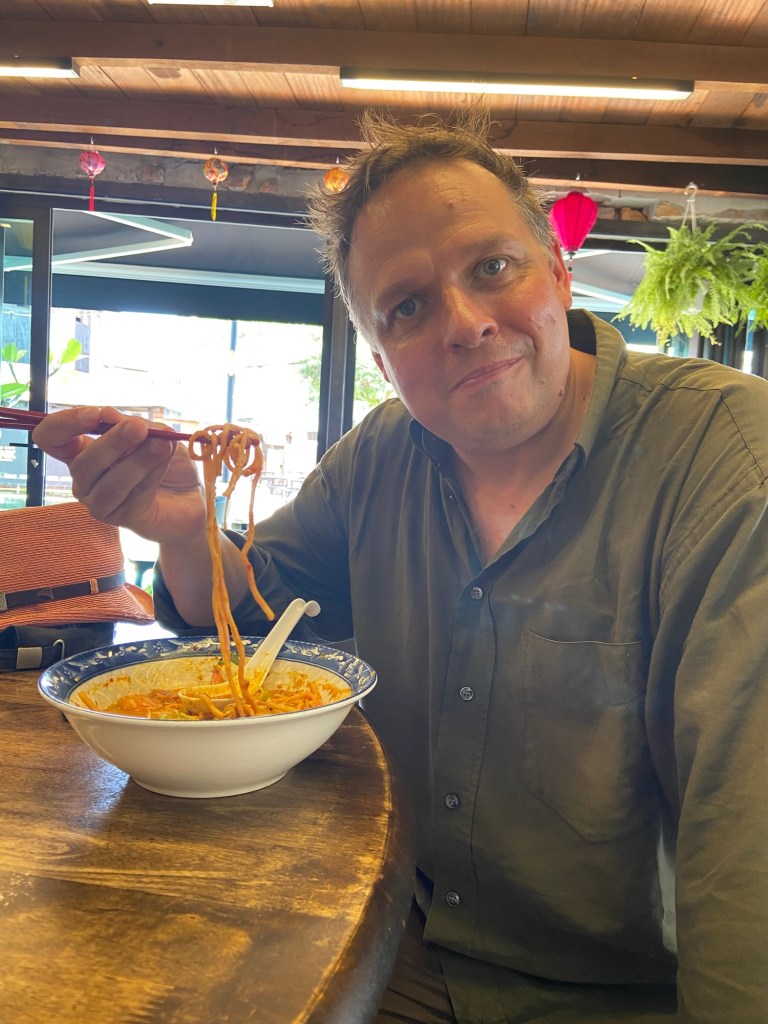
We also had a great dinner at Bulldog Malacca.
It is a modern Peranakan restaurant, with classic dishes designed for sharing.
What we loved most about travelling around Malaysia with kids
Looking back at the entire month, it wasn’t one particular destination that made Malaysia special.
It was the combination.
One day we were eating street food in George Town.
A few days later we were sitting on a beach in the Perhentians.
Then we were on a boat searching for proboscis monkeys in the rainforest.
For children, that variety keeps the trip interesting.
There were also plenty of moments where the adults could enjoy the destination on a deeper level — particularly the food, heritage and cultural experiences.
And because Malaysia offers such different environments relatively close together, we never felt as though we were repeating the same type of holiday.
Our favourite parts of Malaysia
If we had to pick the highlights of the entire 30 days, these would be near the top:
🐒 Wildlife in Sabah
The orangutans, proboscis monkeys and rainforest were extraordinary, but the tiny turtles on Selingan were perhaps the most emotional experience for the children.
🍜 The food
Malaysia is an incredible destination for families who enjoy food.
Our children were able to try a huge variety of dishes, from roti canai and noodles to tropical fruit, desserts and Malaysian street food.
🏝️ The Perhentian Islands
After weeks of exploring, five nights of beach time was exactly what we needed.
🏛️ Penang
George Town’s combination of food, history, street art and culture made it one of our favourite places to explore as a family.
🌿 The variety
This may actually be the biggest reason we’d recommend Malaysia.
You can build a trip around city + food + culture + mountains + beach + wildlife, rather than choosing just one style of holiday.
Would we do the same Malaysia itinerary again?
Probably not exactly.
That’s not because there were places we disliked. Quite the opposite.
With another trip, we’d probably spend more time in some places and explore different areas.
But for a first family trip, we loved the way this itinerary changed pace.
KL → Ipoh → Cameron Highlands → Penang gave us cities, food, culture and mountains.
The Perhentians gave us the break we needed.
And Sabah gave us the adventure.
Ending in Melaka was also a nice way to return to Malaysian culture and history before heading home.
How long do you need in Malaysia with kids?
Our 30 days might sound like a long time, but Malaysia is one of those countries where you can easily build a shorter or longer trip.
If you only have 10–14 days, I would resist trying to copy our entire itinerary.
Instead, choose two or three distinct experiences.
For example:
Option 1 — First Malaysia trip
Kuala Lumpur → Penang → beach
Option 2 — Culture + nature
Kuala Lumpur → Penang → Sabah
Option 3 — Longer family adventure
Kuala Lumpur → Ipoh → Cameron Highlands → Penang → Perhentian Islands → Sabah
Our own month-long trip was closer to Option 3.
The important thing is to leave enough space between the major experiences.
Our five nights on the Perhentians were not “wasted days” in the itinerary.
They were what made it possible to enjoy the adventure that came afterwards.
Our Malaysia travel videos
If you’d like to see more of the places and experiences from our trip, we’ve documented much of the journey on YouTube.
Kuala Lumpur
Shangri-La Kuala Lumpur: Our Family Stay
5 Kuala Lumpur Attractions You Shouldn’t Miss
15 Malaysian Foods We Tried on a Kuala Lumpur Street Food Tour
Ipoh
Is Ipoh Malaysia’s Most Underrated Tourist Destination?
Cameron Highlands
Best Things to Do in Cameron Highlands: Is It Worth Visiting?
Penang
Penang Food & Culture: 4 Days in George Town
Borneo
Malaysian Borneo: Orangutans, Turtles & Wildlife in Sabah
More Malaysia articles coming soon:
→ Our Borneo Family Adventure: Orangutans, Wildlife & Turtle Island
→ What to Eat in Kuala Lumpur & Penang: Our Malaysia Food Guide
Final thoughts: would we recommend Malaysia for families?
Absolutely.
Our 30 days in Malaysia gave us some of the biggest variety we’ve experienced on a family trip.
There were moments of pure relaxation, like sitting on the beach in the Perhentians.
There were moments of cultural discovery, from the temples and historic streets of Penang and Melaka to the Batu Caves.
There was a lot — a lot — of food.
And then there was Borneo, where the trip turned into a genuine wildlife adventure.
What we particularly loved was that Malaysia didn’t require us to choose between those experiences.
We could have all of them in one trip.
And for a family who wants a holiday that goes beyond a beach resort or a checklist of attractions, that’s what makes Malaysia such a compelling destination.
If you’re planning your own family trip to Malaysia, start with our itinerary above, then use the individual destination guides and videos to build the version that works best for your family.
Happy Travels,


