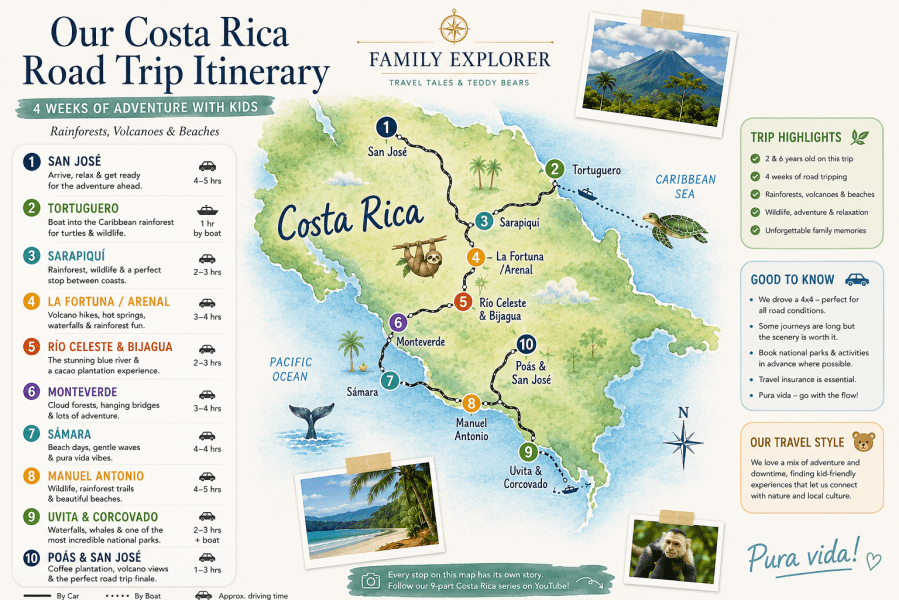
From Tortuguero and Arenal to Monteverde, Sámara, Manuel Antonio and Corcovado — our family-tested route, favourite stops and lessons from a month on the road.
Costa Rica had been on our family travel wish list for a while, and when we finally made it there, we decided not to rush.
Instead of trying to squeeze Costa Rica into ten days, we spent a full month travelling around the country by car, combining rainforest and wildlife, volcanoes, cloud forests, waterfalls, beaches and plenty of time simply enjoying the places we were staying.
At the time, our children were 2 and 6 years old, which naturally influenced the way we travelled. Long hikes were not always an option, we needed accommodation where everyone could unwind, and after a few days packed with wildlife and adventure, a swimming pool or a quiet beach became just as important as the next national park.
The result was a varied four-week itinerary that took us from the Caribbean coast to the Pacific, through some of Costa Rica’s best-known national parks and a few quieter places in between.
This guide brings the whole trip together in one place.
You’ll find our complete Costa Rica itinerary, the route we followed, the places we stayed, our favourite family activities and the experiences we would prioritise if we were planning the trip again.
And because this was a real family trip rather than a theoretical itinerary, I’ll also tell you where we slowed down, what surprised us and which places we thought were worth the effort.
Our Costa Rica family trip at a glance
Length: 4 weeks
Travellers: 2 adults + 2 children, aged 2 and 6
Transport: Rental car + boat transfer to Tortuguero
Style: Independent road trip
Pace: Slow enough for children, but still adventure-heavy
Focus: Wildlife, rainforest, volcanoes, beaches and family adventures
Our route
San José → Tortuguero → Sarapiquí → La Fortuna/Arenal → Bijagua/Río Celeste → Monteverde → Sámara → Manuel Antonio → Uvita/Osa Peninsula → San José
It is a fairly ambitious route, but having a month gave us the luxury of staying several nights in most places rather than constantly packing and unpacking.
Costa Rica may look small on a map, but travelling around it takes longer than you might expect.
Road conditions, weather, traffic and winding mountain roads can make apparently short journeys considerably slower than the distance suggests. This is one reason I would not try to copy our entire route on a two-week holiday.
Why Costa Rica is so good for a family trip
Costa Rica is almost unfairly well suited to travelling with children.
Where else can a family spend the same trip:
- looking for monkeys and sloths in the rainforest
- walking across hanging bridges
- hiking around a volcano
- swimming beneath a waterfall
- making chocolate from cacao beans
- soaking in natural hot springs
- ziplining through cloud forest
- watching turtles come ashore at night
- relaxing on a Pacific beach
- taking a boat through rainforest canals
- hiking through one of the world’s most biodiverse forests?
And importantly, you don’t need to choose between adventure and relaxation.
That became one of the defining features of our trip.
We could spend one morning hiking through the rainforest and the next afternoon doing absolutely nothing except swimming.
With a two-year-old and a six-year-old, that balance mattered.
Our 4-week Costa Rica itinerary
Our trip was roughly divided into these stages:
| Stop | Why we went | Family highlight |
|---|---|---|
| San José | Arrival and recovery | Hacienda Belen |
| Tortuguero | Wildlife and turtles | Turtle watching |
| Sarapiquí | Rainforest and wildlife | Nature experiences |
| La Fortuna | Volcano and adventure | Hot springs |
| Bijagua / Río Celeste | Nature and cacao | Chocolate-making |
| Monteverde | Cloud forest and adventure | Ziplining |
| Sámara | Beach and downtime | Family beach days |
| Manuel Antonio | Wildlife + beach | National Park |
| Uvita / Osa | Wild Costa Rica | Corcovado |
| San José | Final night | Coffee plantation |
The order worked particularly well for us because the trip gradually changed character.
We started with rainforest and wildlife, moved into volcano country and adventure, then crossed to the Pacific coast before finishing with the spectacular biodiversity of the Osa Peninsula.
1. San José: start slowly
Recommended stay: 2–3 nights
Our international flight arrived very late, so we deliberately didn’t try to start the road trip immediately.
That turned out to be an excellent decision.
We initially planned to stay two nights before continuing towards Tortuguero, but a tropical storm changed our plans.
Storm Bonnie was approaching, and rather than taking unnecessary risks on the road, we added another night and changed accommodation.
Our second hotel, Hacienda Belen, turned out to be a surprisingly good place to spend a forced day.
There were spacious rooms with two double beds, a swimming pool for the children and, best of all, plenty of wildlife around the property.
Even from our room, the children were busy watching birds.
And that was our first introduction to a theme that would continue throughout Costa Rica:
you don’t always need an organised wildlife tour to see wildlife.
Sometimes you simply need to stop looking at your phone and look at the trees.
Why we recommend starting slowly
If your flight arrives late, resist the temptation to collect your rental car and immediately embark on a long drive.
Costa Rica rewards an early start, and there is plenty of driving later in the itinerary.
A relaxed first couple of days also gives you some flexibility if weather disrupts your plans—which, as we discovered, it can.
2. Tortuguero: Costa Rica’s Caribbean rainforest
Recommended stay: 2–3 nights
From San José, we drove to La Pavona, where the road ends and the journey to Tortuguero continues by boat.
The drive is roughly three to four hours depending on conditions, followed by a boat journey of around an hour.
That boat ride is part of the experience.
Tortuguero feels different from the moment you arrive.
There are no roads connecting it to the rest of the country. Waterways replace streets, and the surrounding rainforest immediately gives you the feeling that you’ve left ordinary Costa Rica behind.
Turtle watching with children
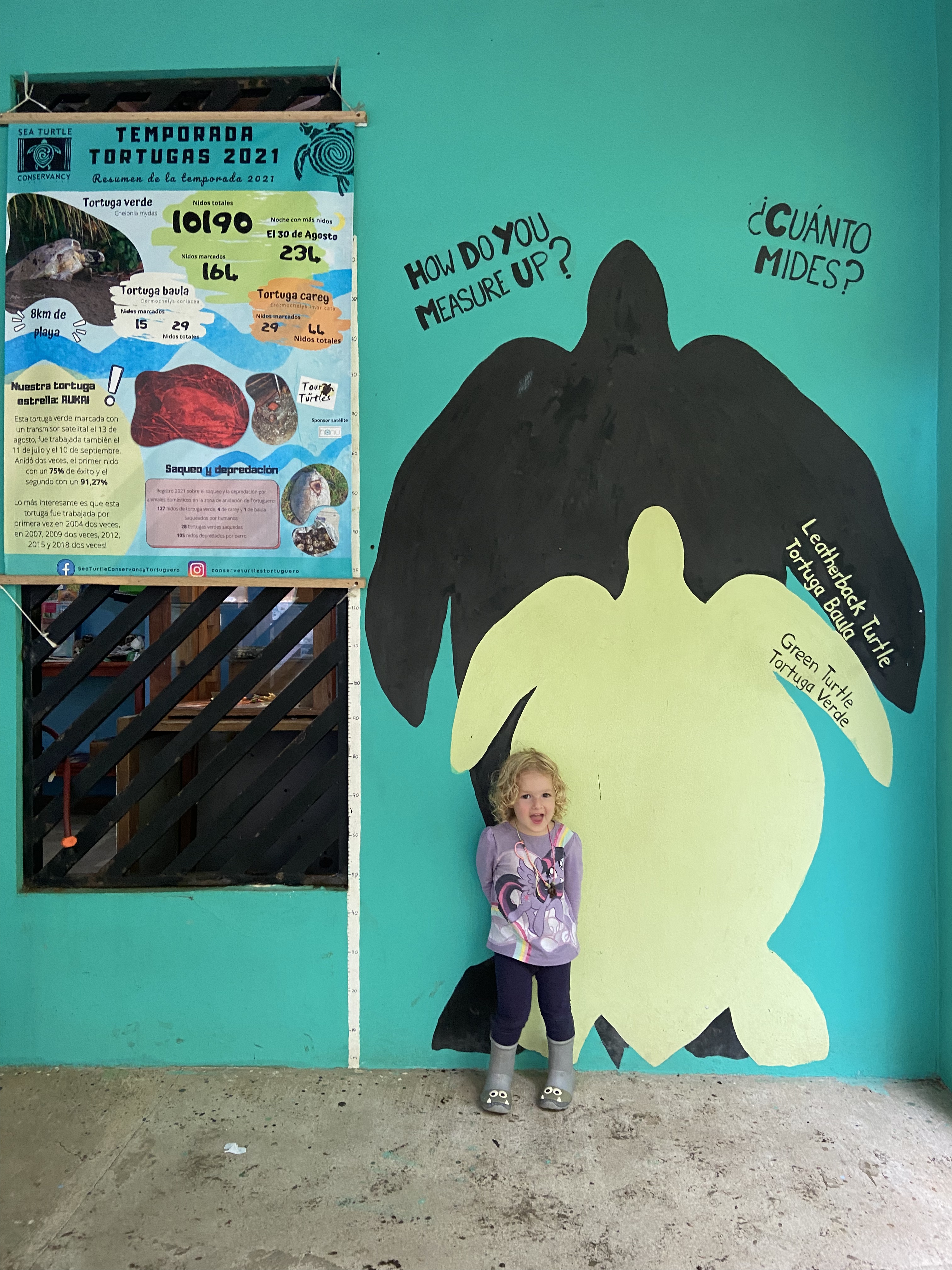
One of the most memorable experiences of the entire trip was our turtle-watching excursion.
We visited during nesting season and went out at night with a guide.
There are strict rules around turtle watching—no phones or cameras on the beach—and although that initially feels strange for a family documenting a trip, it actually makes the experience better.
Our children were fascinated.
We also had the opportunity to see a turtle release through the Sea Turtle Conservancy, which was another unforgettable experience for them.
Don’t miss the canals
We also explored the national park by boat.
For us, this was one of the best ways to experience Tortuguero with young children.
Instead of a long hike, you can sit back and let the rainforest come to you.
Monkeys, birds, reptiles and other wildlife are all part of the scenery.
Tortuguero with toddlers
Tortuguero is an adventure, but it is also a place where you need to accept that things don’t always go according to plan.
Rain can be spectacular.
During our stay, torrential rain forced us to change plans.
But that’s Costa Rica.
Build some flexibility into your itinerary rather than planning every hour.
Our original Costa Rica itinerary post goes into more detail about our Tortuguero stay and logistics.
3. Sarapiquí: a useful wildlife stop
After Tortuguero, we continued to Sarapiquí, a region known for rainforest and bird watching.
We stayed for a couple of nights before continuing towards Arenal.
For a shorter Costa Rica trip, this is one of the stops I would question.
For a month-long itinerary, however, it worked very well.
It gave us a chance to slow down after Tortuguero and break up the journey towards La Fortuna.
It also reinforced another lesson from our trip:
Costa Rica isn’t only about the famous national parks.
Some of our favourite wildlife encounters happened around accommodation and smaller nature areas rather than at the country’s headline attractions.
4. La Fortuna and Arenal: the family adventure capital
Recommended stay: 5–7 nights
If I had to choose one place in Costa Rica that works particularly well for families, La Fortuna would be near the top of the list.
We spent a full week in the Arenal area, staying at Arenal Springs Resort, and still didn’t run out of things to do.
This is where Costa Rica really started to feel like a giant outdoor playground.
Hiking around Arenal Volcano
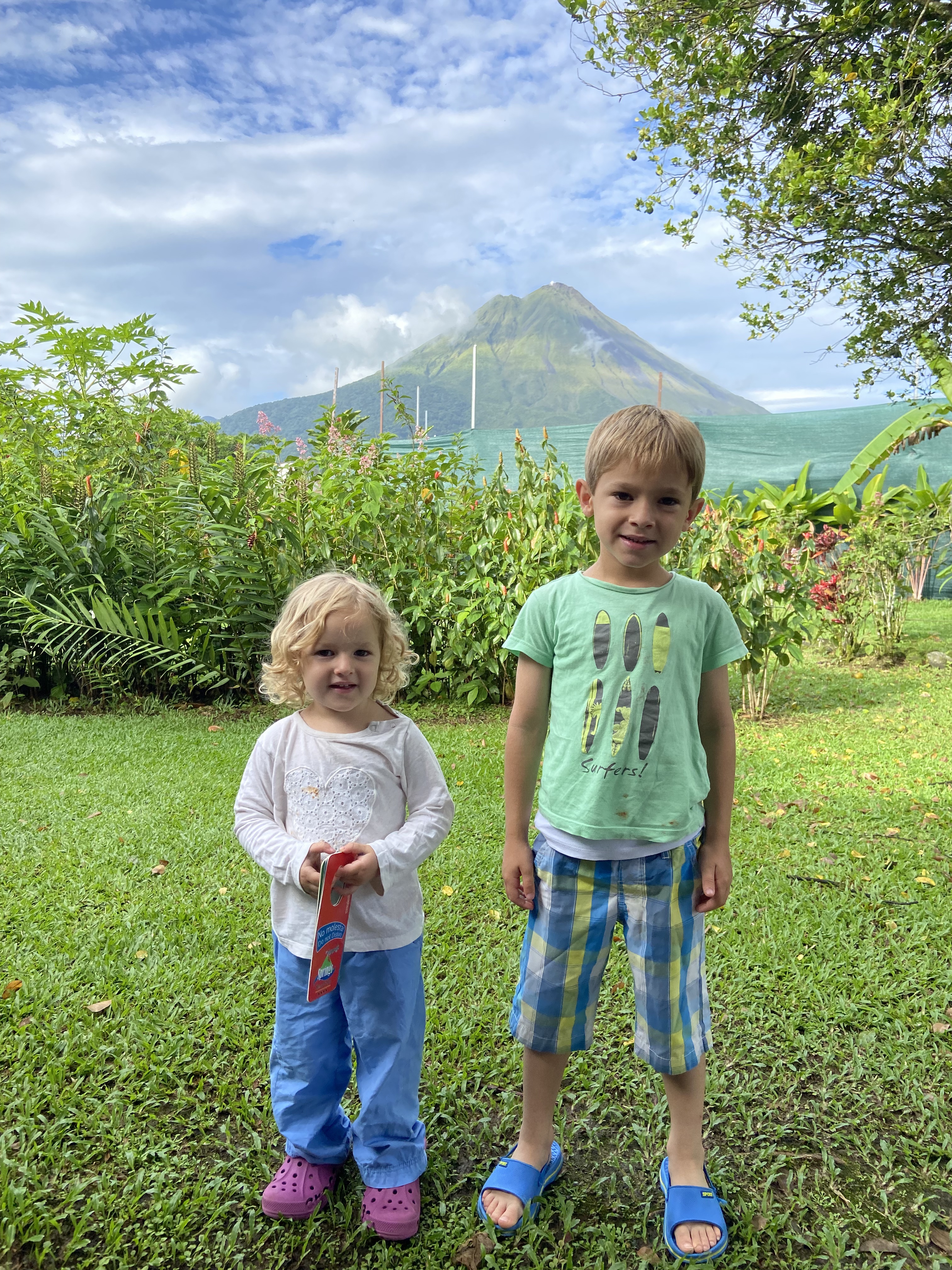
One of our first activities was a guided hike around the base of Arenal Volcano.
The hike took around three and a half hours and included lava fields and views over the surrounding landscape.
For the children, walking across the lava field was almost an adventure in itself.
Having a guide made a big difference because we learned about the volcano, plants and wildlife rather than simply walking through the forest.
Sloth spotting
We also visited a sloth sanctuary where we learned more about both two-toed and three-toed sloths.
And because Costa Rica apparently believes that one animal encounter per day is nowhere near enough, we also saw frogs, toucans and snakes.
Hanging bridges
The hanging bridges were another family favourite.
They can look intimidating when you first step onto them, especially with young children, but our kids quickly got used to the movement.
The experience gives you a completely different perspective on the rainforest.
And yes, it rained a bit.
La Fortuna Waterfall
The waterfall involves a substantial staircase: around 500 steps down and then 500 steps back up.
With a two-year-old, this was definitely one of those moments when family travel requires some negotiation.
But reaching the waterfall and jumping into the refreshing pool made the effort worthwhile.
This is one of the activities I’d rate according to your children’s energy levels rather than simply putting it on a “must do” list.
Chocolate and farm life
The Don Olivo experience was advertised as a chocolate tour, but we found it much broader than that.
We learned about cacao, tasted fresh fruit and sugar cane juice, and got an insight into life on a Costa Rican farm.
For children, I think this is exactly the sort of experience that works particularly well because it isn’t just:
“Look at this attraction.”
They get to touch, taste, make and understand something.
And then there were the hot springs
Our absolute favourite activity in La Fortuna?
Hot springs.
Our hotel had its own thermal pools, but we preferred EcoTermales for its more natural, intimate atmosphere.
After a day of hiking and exploring, sitting in naturally heated water surrounded by lush vegetation while steam rose into the cooler evening air was almost magical.
And the children absolutely loved it.
If you are travelling to Costa Rica with kids, I would make sure some version of this experience is in your itinerary.
5. Bijagua and Río Celeste: add a little blue to your rainforest
Recommended stay: 2–3 nights
From Arenal we moved towards Bijagua, using it as our base for Tenorio Volcano National Park and Río Celeste.
This was also where we stayed at one of the most memorable accommodations of our trip: Finca La Amistad Cacao Lodge.
The lodge was a working cacao farm, and the experience was much more than simply having somewhere to sleep.
We had homemade meals cooked over an open fire, explored the cacao plantation and learned how cacao beans are transformed into chocolate.
The children loved seeing the process from plant to finished product.
Río Celeste
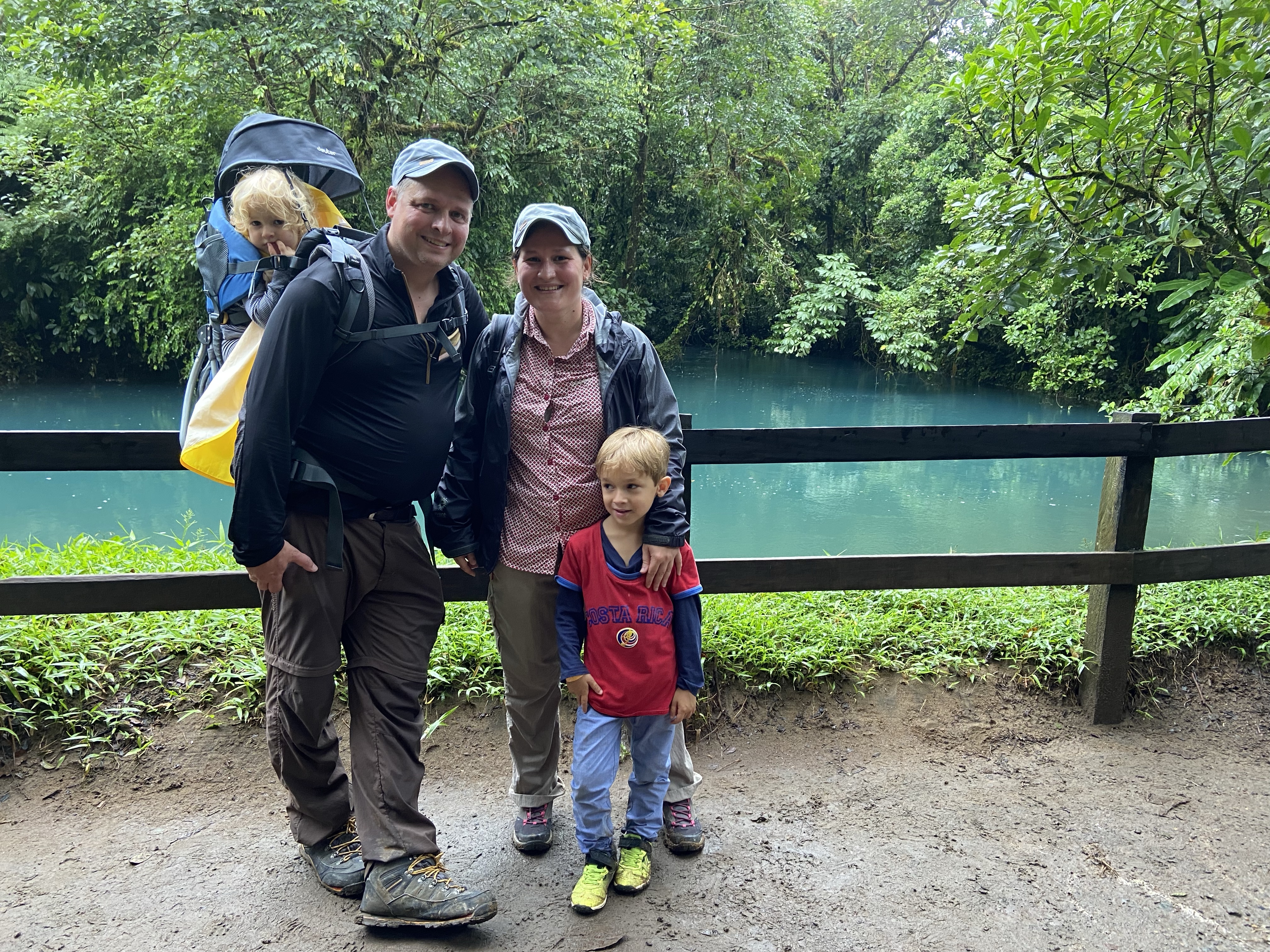
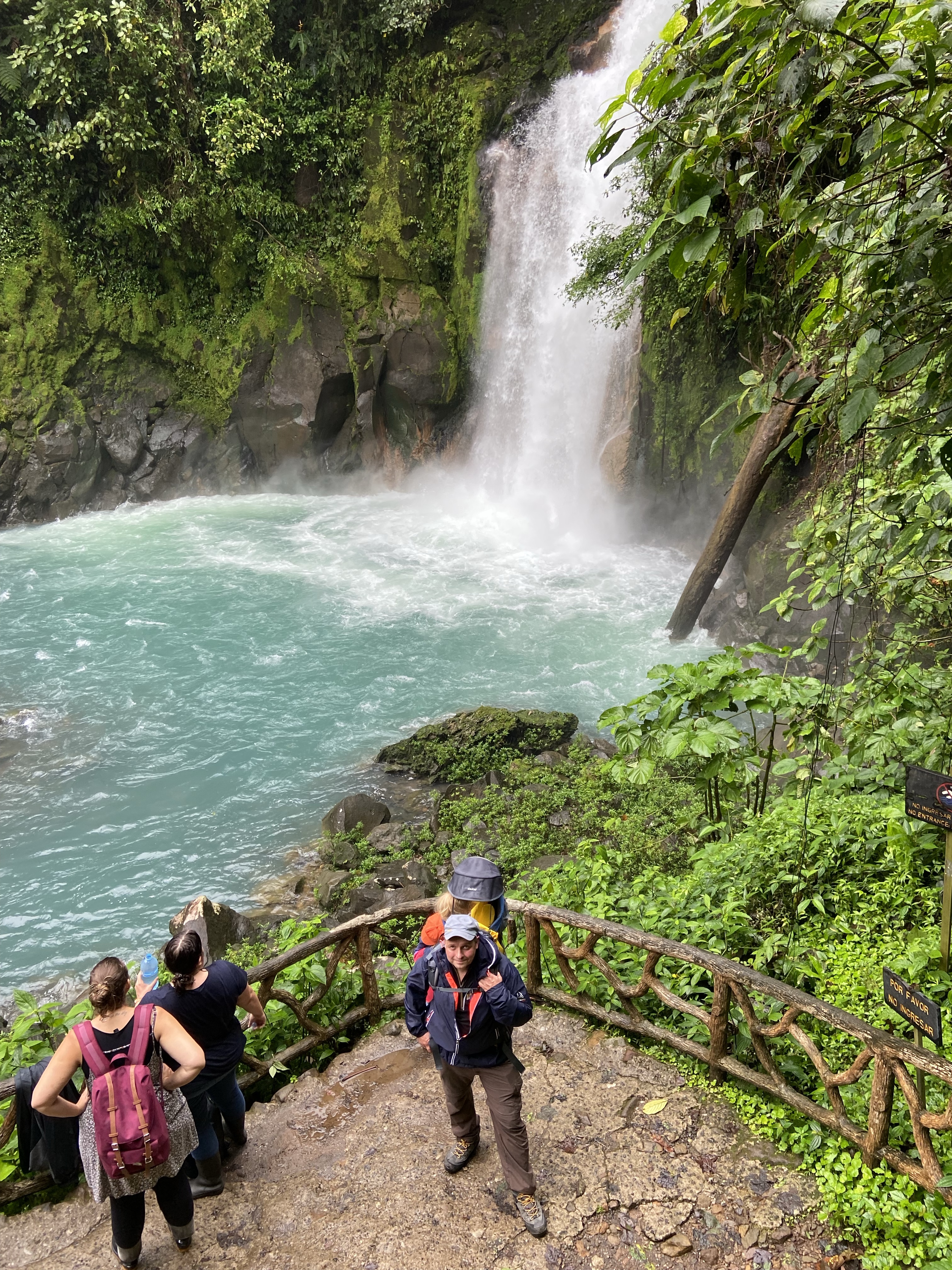
The next day we visited Tenorio Volcano National Park to see the famous blue river.
The colour really is extraordinary.
The walk takes you through rainforest to the river and its viewpoints, with the vivid blue water appearing almost unreal against the surrounding green.
We deliberately arrived early.
Visitor access is managed, and the park can become busy, so this is one place where starting early makes sense.
6. Monteverde: cloud forest and adventure
Recommended stay: 3–4 nights
From Bijagua we continued to Monteverde, where the landscape changed dramatically again.
This time, we were heading into the cloud forest.
The road trip between Costa Rica’s destinations can be deceptive. Direct journey estimates can look manageable, but mountain roads, weather and road conditions mean that you should leave plenty of buffer time. This is particularly important when travelling with children.
Ziplining
Monteverde is one of those places where the children can participate in genuinely adventurous activities.
Our kids were able to take part in a canopy zipline experience, while I explored the butterfly garden with our younger child.
That was another advantage of travelling as a family:
not everyone has to do the same activity.
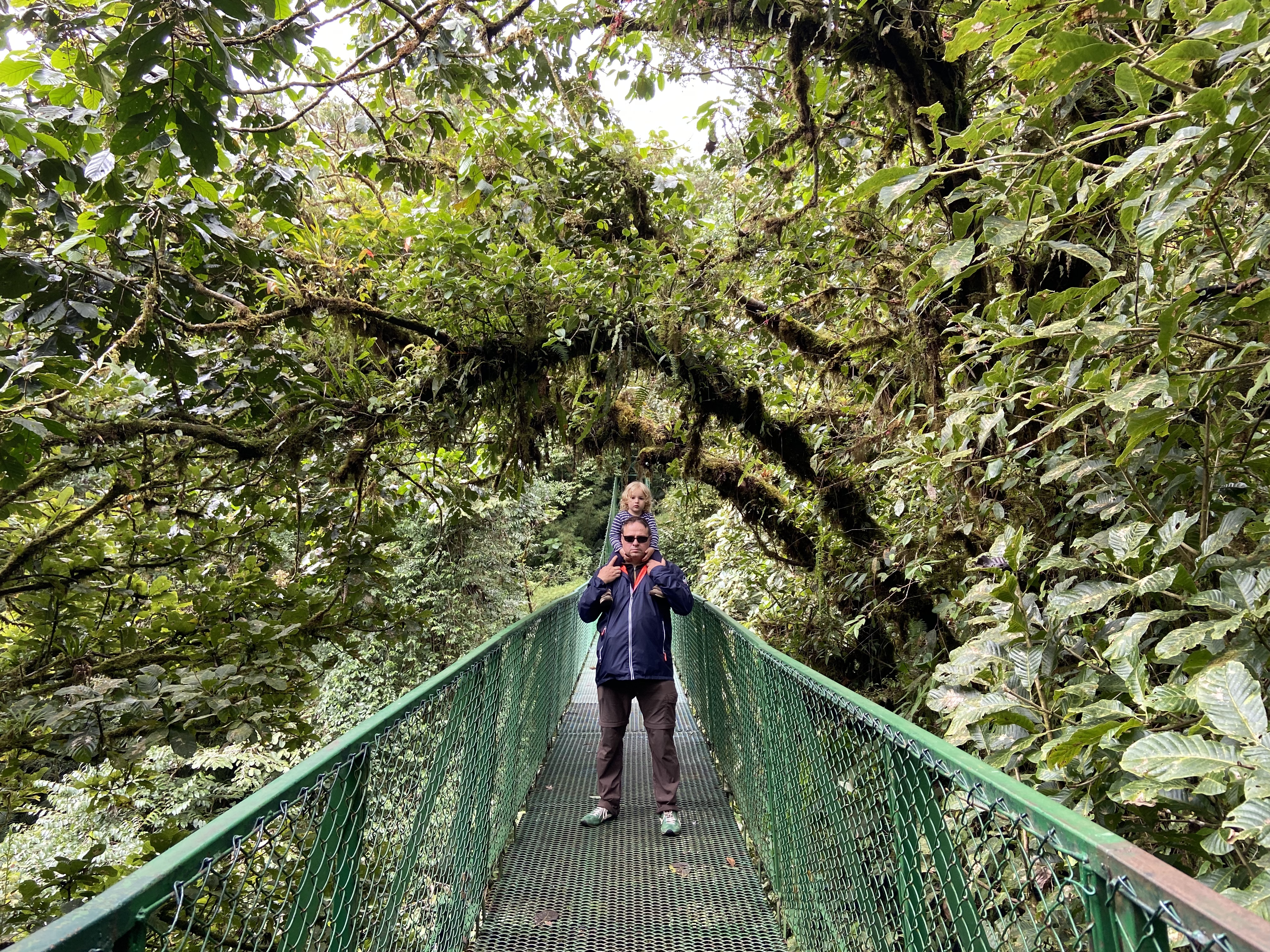
Hanging bridges
We then joined up again for the hanging bridges.
Having already done hanging bridges around Arenal, I wouldn’t necessarily tell you to do every version of the experience in Costa Rica.
If you’re short on time, choose one.
But the Monteverde experience has its own character, with the cloud forest creating a very different atmosphere.
Santa Elena Cloud Forest Reserve
One of my favourite discoveries in Monteverde was Santa Elena Reserve.
We deliberately chose it over the better-known Monteverde Cloud Forest Reserve because it felt quieter and more remote.
Walking through the misty forest felt almost prehistoric.
Huge ferns, moss-covered trees and clouds drifting through the forest make the whole place feel like a real-life Jurassic Park.
For families who prefer nature over crowds, this is exactly the sort of alternative worth considering.
7. Sámara: time to stop doing things
Recommended stay: 3–4 nights
After so much rainforest, hiking and adventure, we needed a change of pace.
So we headed to the Pacific coast and Sámara.
This was one of the most important stops on our itinerary—not because we did a huge number of activities, but because we didn’t.
We stayed in a small villa surrounded by a garden and spent time at the beach.
Sámara’s main beach has relatively gentle waves and a relaxed atmosphere, making it a particularly good fit for families.
We also explored some quieter beaches nearby.
And this is where our Costa Rica itinerary finally shifted from:
“What are we doing today?”
to:
“Do we actually have to do anything today?”
With young children, that is an important part of a month-long itinerary.
8. Manuel Antonio: wildlife almost everywhere
Recommended stay: 3–4 nights
From Sámara we continued south towards Manuel Antonio.
The national park is famous for combining rainforest, wildlife and beaches in a relatively compact area.
And the reputation is deserved.
We saw wildlife almost immediately.
Monkeys were everywhere, and we eventually had one of our closest encounters with a sloth.
The downside?
Crowds.
Manuel Antonio was by far the busiest national park we visited.
That doesn’t make it bad—far from it.
It simply means you should set your expectations accordingly.
If you’re travelling with children and want an easier wildlife experience, Manuel Antonio is excellent.
If you are looking for solitude, there are other places on this itinerary that will suit you better.
The beach inside Manuel Antonio
The beach within the national park is beautiful and is one of the reasons the park works so well for families.
You can combine a wildlife walk with beach time without having to make another journey.
Just remember that wildlife and food do not mix. Keep snacks packed away and follow the park rules.
A quieter alternative: Playa Biesanz
We also visited Playa Biesanz, a small beach close to our hotel.
It was much quieter and more relaxed than the main park beaches.
The seabed is rocky, so water shoes are useful.
For us, it was a great example of why it is worth asking locally about alternatives to the famous attractions.
9. Uvita and the Osa Peninsula: Costa Rica gets wild again
Recommended stay: 3–4 nights
Our final major destination was Uvita, which gave us access to some of the most spectacular nature of the trip.
We started with waterfalls.
Lots of waterfalls.
The children loved the natural water slides and swimming pools, and this was one of those days where the activity was as much about having fun together as seeing another famous Costa Rican landmark.
Corcovado National Park
Then came one of the biggest adventures of our entire month:
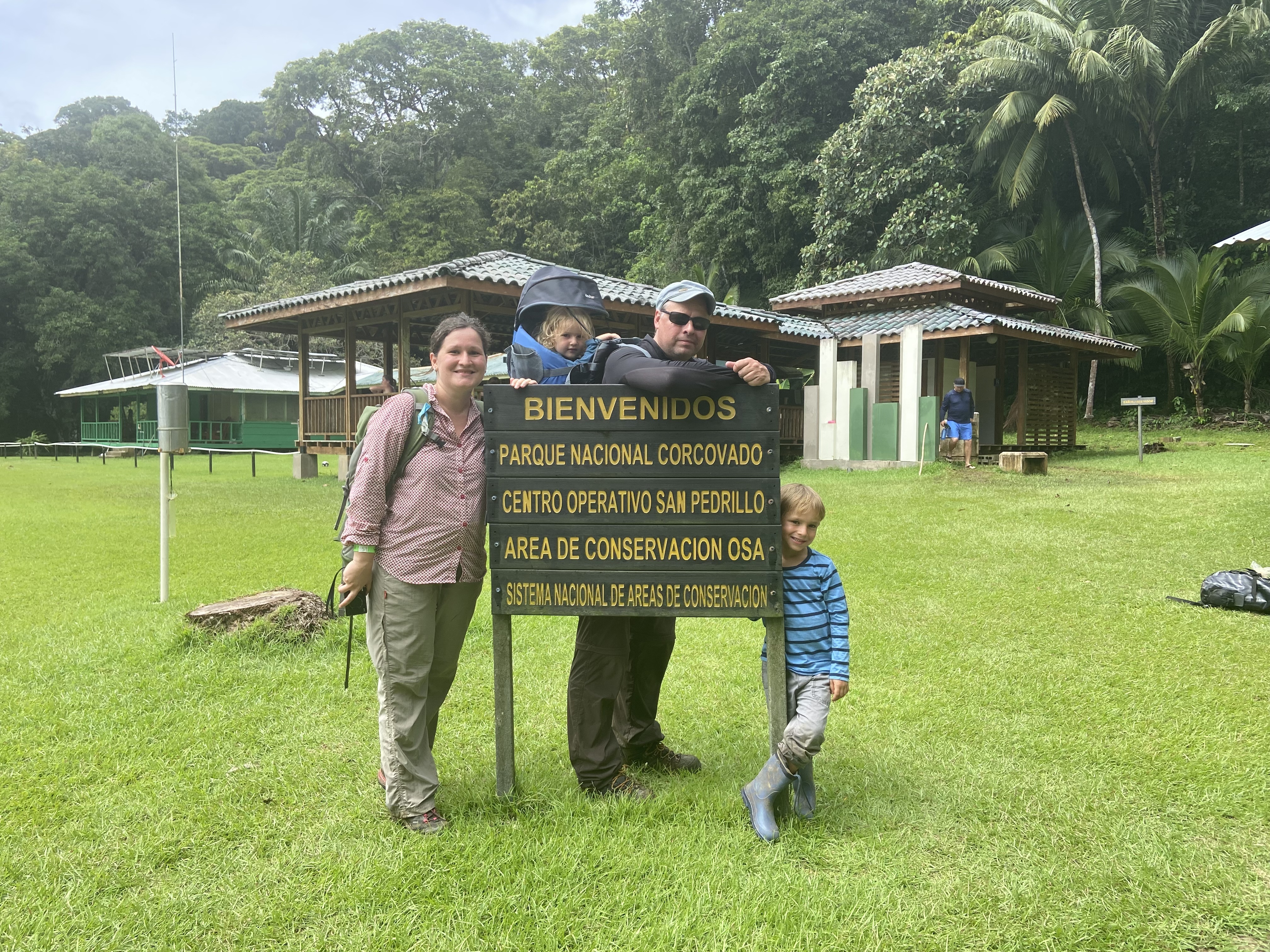
Corcovado National Park.
We travelled by speedboat from the Marino Ballena area towards the Osa Peninsula.
The journey itself was already memorable—we saw turtles and even our first humpback whale.
Then we entered the primary rainforest of Corcovado.
And this felt completely different from the more accessible national parks earlier in the trip.
The forest was dense, wet and wild.
We saw an incredible variety of wildlife, including a tapir, which was one of our first encounters with this animal in Costa Rica.
For me, Corcovado was one of the strongest reminders of why this country is such an extraordinary destination for nature lovers.
Is Corcovado suitable for young children?
This is where I would add a big family-specific caveat.
We did it with children aged 2 and 6, but it was an adventurous day.
There is boat travel, a wet landing and hiking through dense rainforest.
It is not the easiest national park experience with a toddler.
But if your family enjoys adventure and your children are comfortable with boats, walking and getting wet, it can be extraordinary.
And if your children aren’t?
There are plenty of easier ways to experience Costa Rica’s wildlife.
You don’t need Corcovado on your itinerary simply because it is famous.
10. Back to San José: coffee and one last volcano
After our time on the southern Pacific coast, we headed back towards San José.
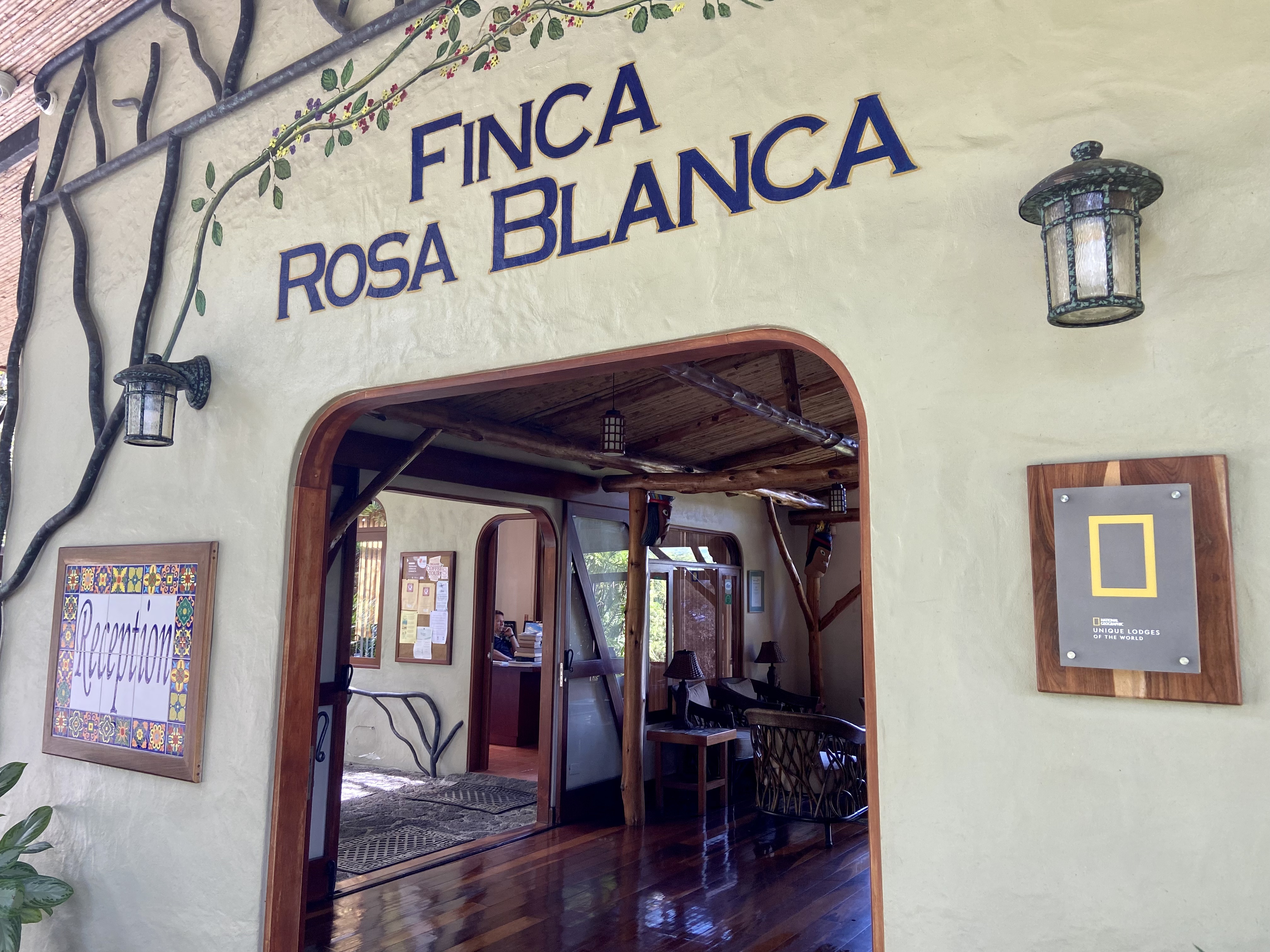
Rather than simply spending our final night near the airport, we chose Finca Rosa Blanca, a boutique property set on a coffee plantation overlooking the Central Valley.
It turned out to be the perfect final stop.
We toured the coffee plantation, learned about the production process and, naturally, drank plenty of coffee.
The children enjoyed seeing how coffee is grown and processed, while we enjoyed the views.
And then we discovered the best part:
a hot tub overlooking San José.
After four weeks of travelling around Costa Rica, it was a rather perfect way to finish.
Our favourite experiences in Costa Rica with kids
If you asked us to narrow the trip down, these would be among our standouts:
🐢 Turtle watching in Tortuguero
One of those experiences that stays with the whole family.
🌋 Arenal
The combination of volcano, rainforest, wildlife, waterfalls and hot springs makes La Fortuna incredibly versatile.
♨️ Hot springs
Especially after an active day.
🍫 Chocolate making
Because children remember things they get to make themselves.
🌫 Monteverde Cloud forest
One of the most atmospheric nature experiences of the trip.
🏖 Sámara
Because every family needs some days where the itinerary says:
go to the beach and do nothing.
🦥 Manuel Antonio
Excellent wildlife spotting with relatively manageable walks.
🌳 Corcovado
The most adventurous and wild experience of the trip.
☕ Coffee at Finca Rosa Blanca
A lovely way to end a month of travelling.
What we loved about travelling around Costa Rica with young children
Travelling with a two-year-old and six-year-old inevitably meant adapting our expectations.
But Costa Rica made that surprisingly easy.
There is wildlife everywhere
You don’t necessarily need a four-hour guided hike.
Sometimes the wildlife is outside your hotel room.
Sometimes it’s hanging from a tree beside the road.
Sometimes it appears while you’re eating breakfast.
That constant possibility of seeing something exciting kept the children engaged.
There is enormous variety
This was probably the biggest strength of our itinerary.
Every few days the landscape changed.
Rainforest.
Volcano.
Cloud forest.
Beach.
Primary jungle.
Coffee plantation.
That kept a four-week trip from feeling repetitive.
Adventure can be scaled
Costa Rica has activities for different ages and confidence levels.
You can choose:
easy
→ wildlife watching
moderate
→ hanging bridges and waterfalls
adventurous
→ ziplining
very adventurous
→ Corcovado
That makes it possible to build a trip around the children you actually have rather than the children you wish you had on holiday.
What we would do differently
A couple of years later, there are inevitably things we would change.
The biggest lesson is not to underestimate travel time.
A route that looks straightforward on a map can involve several hours of driving, winding roads and weather-related delays.
Current journey planners still warn travellers to allow generous buffers for Costa Rica road trips, particularly because weather and road conditions can affect travel times.
With young children, that matters even more.
I would rather arrive at 4pm and have time for a swim than spend the afternoon trying to squeeze in one more attraction.
How long do you need in Costa Rica?
You absolutely don’t need a month.
But I also wouldn’t try to reproduce our entire itinerary in a short trip.
7–10 days
Choose two or three regions.
For example:
La Fortuna → Monteverde → Manuel Antonio
This gives you volcanoes, cloud forest, wildlife and beaches without attempting to cover the entire country.
2 weeks
You can add either:
Tortuguero
or
Sámara/Uvita
depending on whether wildlife or beach time is more important to you.
3 weeks
Now you can start adding more variety and reducing the pressure between destinations.
4 weeks
This is where our itinerary makes sense.
You can travel from the Caribbean to the Pacific, spend several nights in each place and actually have days when you do very little.
And honestly, those slow days are some of the reason we enjoyed the trip so much.
What to pack for a Costa Rica family road trip
Costa Rica’s climate means that packing requires a little more thought than simply throwing a swimsuit into the suitcase.
We travelled during the rainy season and found that rain was very much part of everyday life—but it didn’t stop us from doing things.
Our original packing guide goes into much more detail, but the items we found particularly useful included:
- lightweight rain ponchos
- insect repellent
- refillable water bottles
- sunscreen
- water shoes
- hiking shoes or good trainers
- quick-drying towels
- a dry bag
- lightweight long trousers
- breathable long-sleeved tops
The dry bag was actually the one thing we wished we’d brought from the beginning.
With boats, waterfalls, rafting, tubing and swimming all featuring in the itinerary, keeping phones and other valuables dry is surprisingly useful.
You can read our dedicated Costa Rica family packing list for the full version.
Our Costa Rica family road-trip map
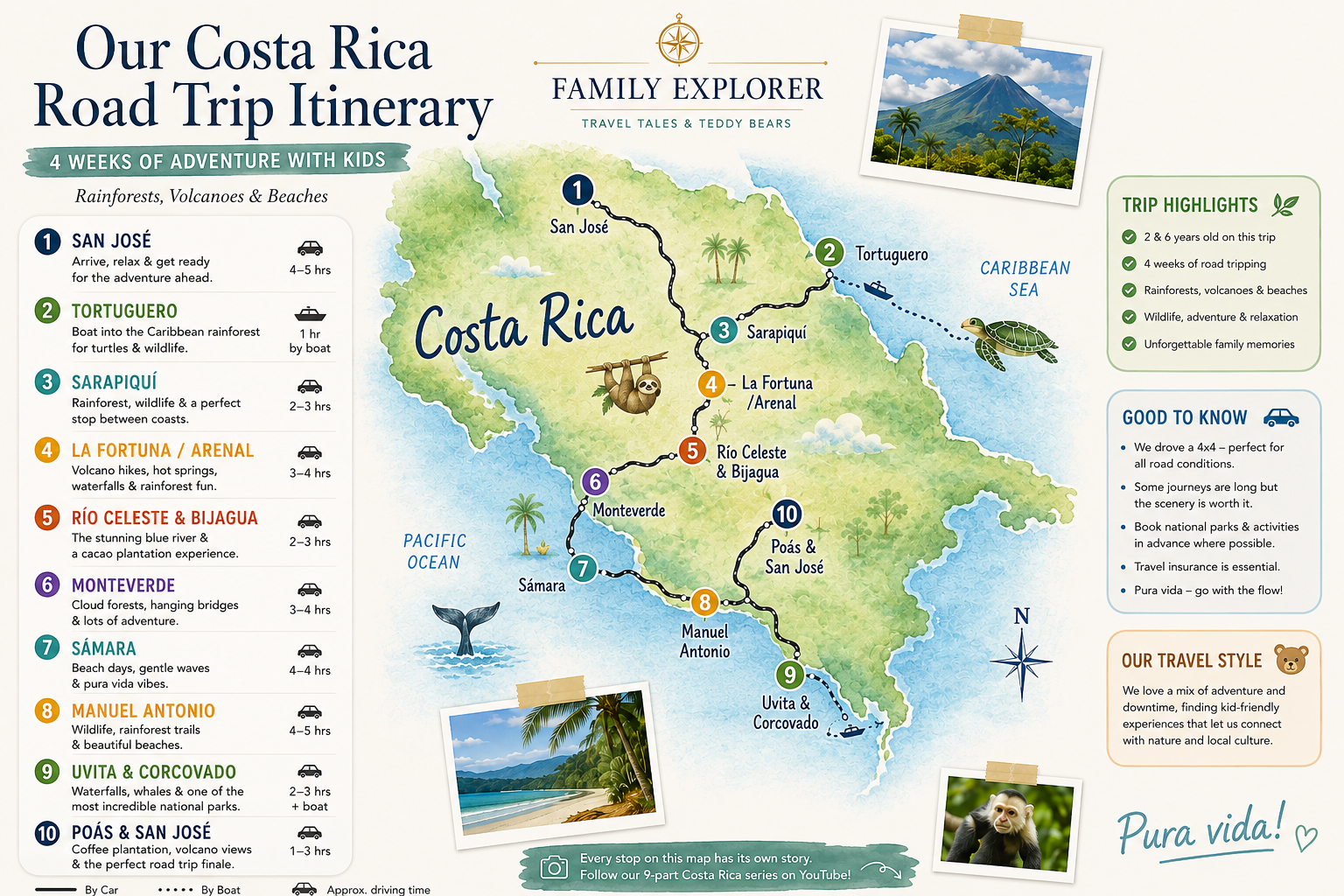
Our route:
San José → Tortuguero → Sarapiquí → La Fortuna → Bijagua/Río Celeste → Monteverde → Sámara → Manuel Antonio → Uvita/Osa Peninsula → San José
That would make the map genuinely useful rather than simply decorative.
Our Costa Rica YouTube series
Want to see what these places actually looked like with two young children?
We filmed the entire trip.
Episode 1 — San José & the start of our Costa Rica road trip
Episode 2 — Tortuguero National Park
Episode 3 — La Fortuna & Arenal with Kids
Episode 4 — Río Celeste & Cacao Lodge
Episode 5 — Sámara & Playa Carrillo
Episode 6 — Monteverde with Kids
Episode 7 — Manuel Antonio National Park
Episode 8 — Uvita & Corcovado
Episode 9 — Finca Rosa Blanca & Poás Volcano
More Costa Rica family travel from Travel Tales and Teddy Bears
This guide is intended as the starting point, rather than the end of the rabbit hole.
We’ve already written more detailed articles about specific parts of the trip, so use this itinerary as the hub and dive deeper into whichever stops you’re considering.
Planning and practical information
Costa Rica family packing list
Our experience-based packing advice from travelling around Costa Rica for a month.
San José, Tortuguero & La Fortuna
Our original itinerary post covers the first part of the trip in more detail, including our accommodation and family activities.
Cacao Lodge & chocolate making
Our detailed article about the cacao experience at Finca La Amistad and visiting Río Celeste.
Costa Rica’s national parks with kids
Our newer guide looks specifically at wildlife, Manuel Antonio and Corcovado from a family perspective.
Final thoughts: would we do Costa Rica with kids again?
Absolutely.
In fact, Costa Rica is one of those destinations where travelling with children doesn’t feel like a compromise.
The things that make the country special—wildlife, rainforest, beaches, volcanoes, adventure and the sheer variety of landscapes—are exactly the things that make it exciting for children.
Our children were only 2 and 6 when we travelled, and there were certainly moments when travelling slowly, dealing with rain or carrying a tired toddler required some patience.
But that’s also why we wouldn’t change the decision to spend a full month there.
We had time to wait out a storm.
Time to stay another night.
Time to spend an afternoon in the pool.
Time to sit on a beach without needing to rush to the next attraction.
And time to discover that sometimes the best part of a family road trip isn’t the place you planned to visit at all.
It’s what happens between the stops.
Pura vida. 🇨🇷


