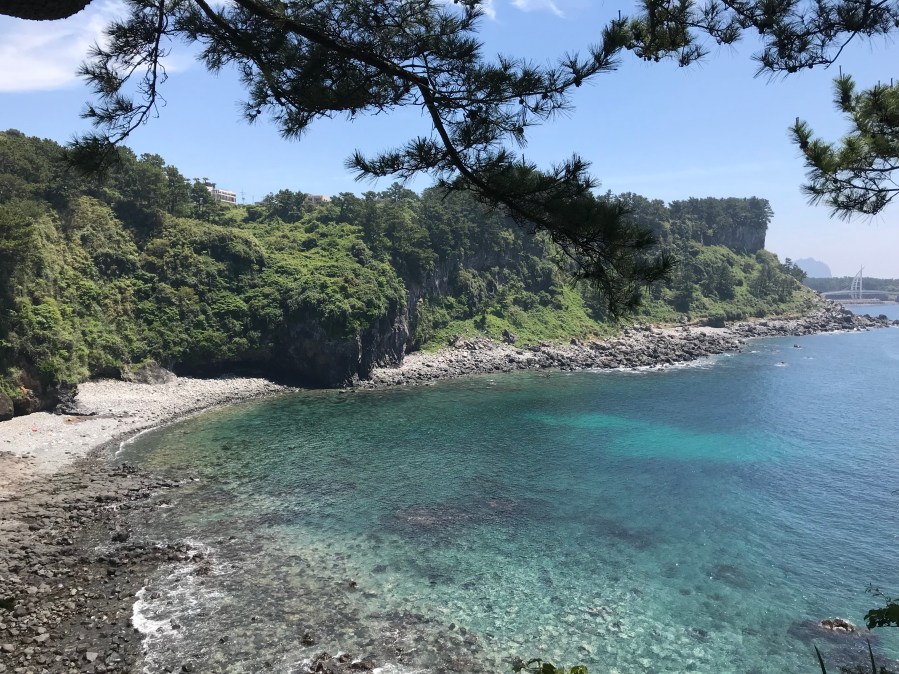
We arrived in Jeju by plane from Busan. We booked the tickets about two weeks before but there were planes leaving literally every 10 minutes so if you are more of a ‘spur of the moment’ person, there will be a seat for you.
In Jeju we landed in the North of the island, in Jeju city. After reading plenty of travel blogs and advice, we rented a car. There are buses serving most of the island but the timetable is not always clear and some spots are difficult to reach ( caves in the North- East). So if you are looking for flexibility, a car is a must. Driving seemed reasonably relaxed. Also there are fixed radars every km or so there is no chance to go too fast. We also rented a baby car seat and it was in very good condition, almost new. Really happy we did not need to haul one from Europe.
The only element that requires some getting used to is the GPS. Most cars will have one that only has a menu in Korean or Chinese. However, you ( or rather the rental guy pepping the car) can select for you to hear the instruction in English. If you need to find an address, you do it by using the phone number of that address. It is actually much faster that typing the full address. The GPS would also run commercials for certain restaurants and attractions when you are in a specific area. Extremely entertaining when you have no clue about the language.
The main attractions in Jeju are linked to nature walks and the outdoors. The best base to reach the most popular higing paths is in the South, in the city of Seogwipo. Here, we rented a self catering appartment with Story Villa and loved our accomodation. There was even a terrace and a spa bath and plenty of space. It provides easy access to Olle Track 7 but more about this later. If you plan to stay more than 2-3 nights, this would be a perfect solution. It is located however a few km away from Seogwipo center so a car is a must.
One word about museums and amusement parks. There was one at every corner (Hello Kitty Park, Teddy Bear Musem , Sea shell Museum etc.) Also, the definition of what constitutes a museum is pretty relaxed, being sufficint to have a certain number of objects belonging to a category, displayed. As the weather was nice, we preferred to spend our time outdoors.

Our favourite outdoor family activities in Jeju do:
1. Exploring the coast by foot on the Jeju Olle Track.
The Olle Track is a interconnecting network of walking and hiking routes that circles the island. There are shorter routes of about 5 km but also a few of about 20 km in length. They also have varying degrees of difficulty and may cross fields, cities, go up the mountain and give access to many of the Jeju do sites. We went to the helpful Olle info Center in Seogwipo and asked about the most accessible routes with a stroller. Large parts of track No 6 and a very scenic section of track no 7 fit this requirement.

Olle Track 6 takes in most of Seogwipo proper. It’s an urban course, with a perfect mix of three waterfalls, two oreum, a traditional everyday market, the Lee Jung Seop Museum and a lot more. The whole track has about 14 km. We did the section starting at Sojeongbang Pokpo waterfall till the end for about 6 km. We found it interesting given the number of sights. It remains largely dominated by concrete pavements making it very accessible. However, after spending a bit of time on Olle track 7, we much preferred walking on the coast line than through the city.
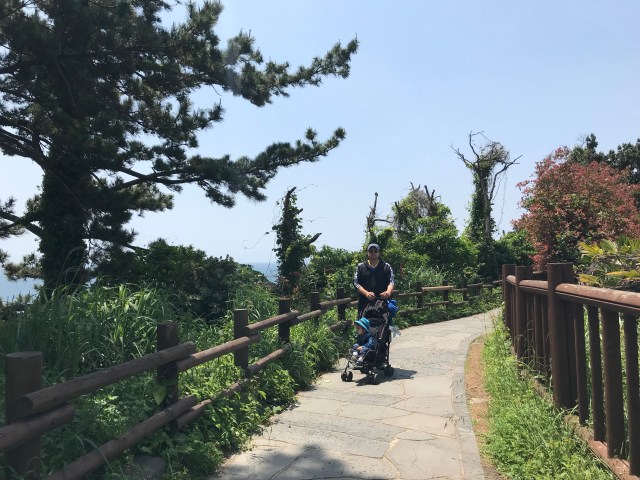
Olle Track 7 was easily accessible from our accommodation and we did it backwards, ending in Oedolgae. There are several viewpoints on this track and a few rest places (coffee shops) and benches. Oedolgae rock can be spotted from different angles. Sokgol is also a nice spot with relatively few people around. There are a couple of sections with stairs so we had to lift and carry the stroller but the great views totally made up for it. The photos below are from this course. There is a nice rest and play area just in front of the viewpoint for Oedolgae rock.


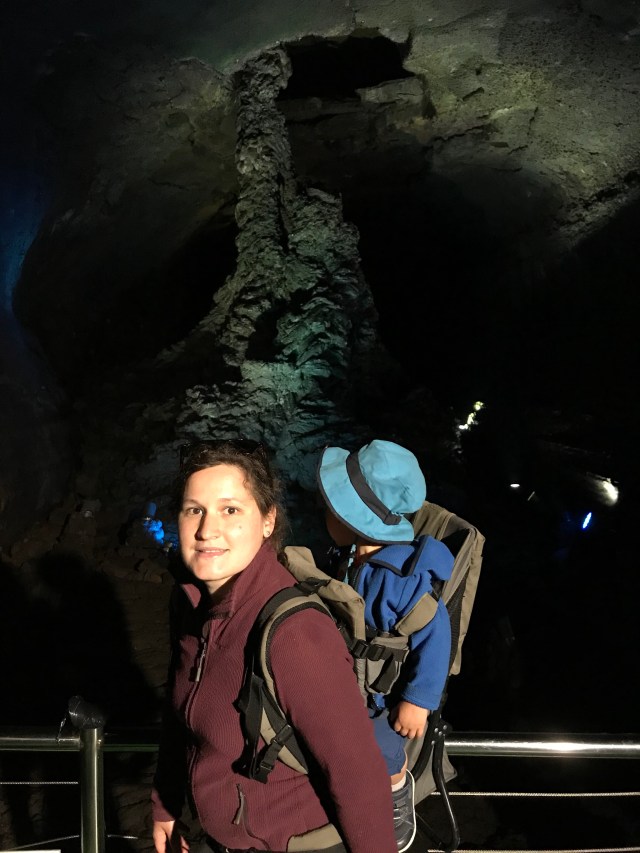
2. Manjanggul Cave is a UNESCO world heritage and one of the finest lava tunnels in the world. Manjanggul Cave has a variety of interesting structures inside including 70cm lava stalagmites and the lava tube tunnels. Only 1km of the 13,422m Manjanggul Cave is open to tourists. The inside of the tunnel sustains a temperature of 11~21℃, creating a comfortable atmosphere. If, like ours, your child is not yet comfortable with walking long distances, consider bringing a backpack. The terrain inside is extremely uneven and a stroller will not make it past the ticket booths. A flashlight would also be handy as the lighting is very dim. Inside, stone pillars and stalactites are widely spread and the tunnels shows off the cave’s topographical features. “Stone Turtle” is very popular because it is shaped like the Jeju-do Island.
Set aside at least an hour for the trip and having a look at the explanations regarding the cave formation outside. If your child is a bit older, the navigation through the dark tunnel and narrow bridges will defined feel like an adventure.
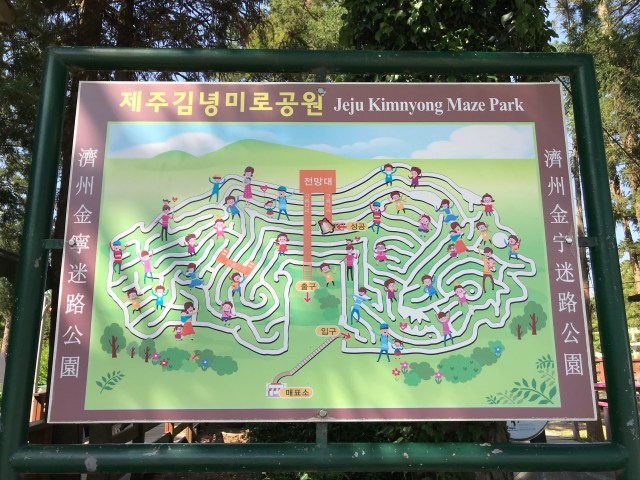
If you want to spend time in the sun or have no backpack/carrier, the maze at Kimnyong Park looked like a local family favourite. It is 500 m or so from the cave complex, on the same road. I was already exhausted after carrying 15 kg for 2 km that we decided to only stop for refreshments and continued towards our apartment.
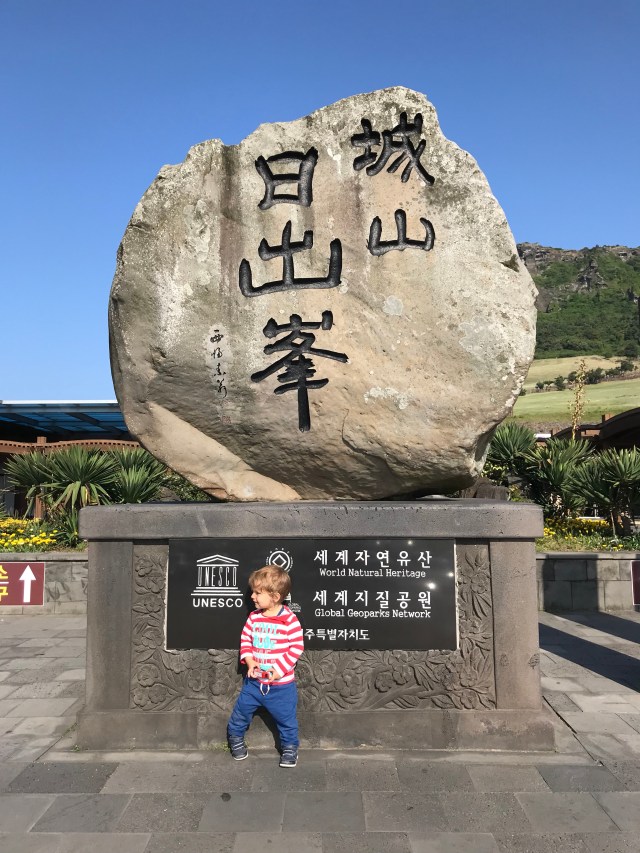
3. The volcanic cone at Seongsan Ilchulbong
Set in the East of Jeju do, this is the number one sight of the island, heavily promoted all throughout Korea. The crowds visiting on a normal day make this a very busy location. If you want to see the cone proper, you will need to climb a steep flight of stairs for about 20 min to reach the 180m height of the viewpoint.
The peak is surrounded by a very big town and large car park with hundreds of bus tours. The peak itself is quite nice with its beautiful green lawn, high cliff and seacoast landscape, but with thousands of tourists, the place was really chaotic and noisy and made the whole experience not quite enjoyable. Actually we had a nicer time walking around the base and admiring the coastal scenery.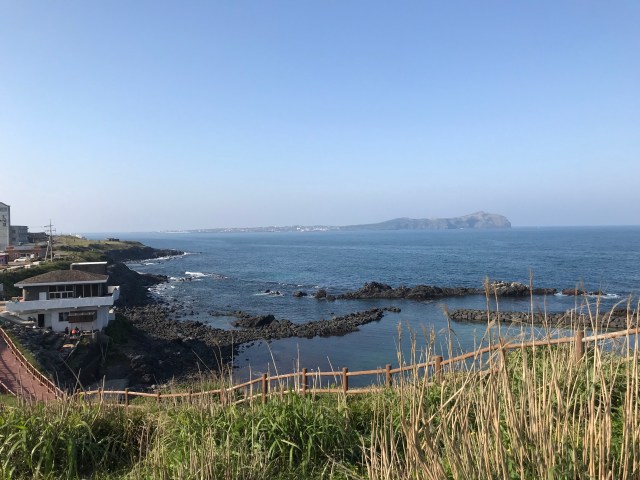
4. Saeseom Island walk and Saeyeongyo Bridge
Saeyeongyo Bridge, inspired by ‘Tewu’ (Jeju’s traditional log boat) connects Seogwipo Port and Birds Island. The bridge has a major tower inspired by the wind and a sail and flamboyant LED lights at night. The wind can be very strong on the bridge.
The island has a number of leisure facilities such as a 1.2km walking path, a public square, wooden deck road, pebble road, forest walking path and theme photo zone. The walking path can be easily followed by a stroller. There are toilet facilities at the beginning of the path. We spent a fun couple of hours discovering this peaceful corner of the island and playing with pebbles on the way.


5. Sampling sea food in a traditional restaurant
In Jeju choices are endless, especially with easily available fresh seafood.
We tried Sambo Sikdang serving delicious grilled fish and fish and clam stew. We have easily identified the local specialities from the photos on the menu :). Everything is in Korean. Take your shoes off and sit on the floor at the lower tables on the left side. We were the only non-Koreans when we visited and it was full. For a quick lunch, Sol Fish in The Pink Ocean does fish and chips on the spot and are English speaking.
For a change from the local fare, you can have a burger or nachos at Seabong Kitchen. This is a cosy place that also offers a few games (cards, Monopoly) while waiting for your food.
I hope you found the post interesting as thanks for stopping by.
Happy travels!

 Travel Tales and Teddy Bears
I miss jeju 😭