From Seoul station, a fast KTX train takes you to Gyeong ju in about 2 h. Adult tickets are 45,000 won and children under 3 are free. There are trains pretty much every 30 min between Seoul and Gyeong ju and a prior reservation is not necessary.
Gyeong ju is dubbed as the Golden City, in commemoration of the golden relics uncovered in the ancient tombs dotted in the area. It is also a UNESCO listed heritage city with a laid back vibe and beautifully preserved temples.
If you decide to spend some time here, you should consider allowing for at least 3 nights, to take in the city and the surroundings. It is also an opportunity to spend time in a traditional Hanok guesthouse, sleeping on futons laying on the Ondol (heated floors).
The not-to-miss sights of Gyong ju and its surroundings are:
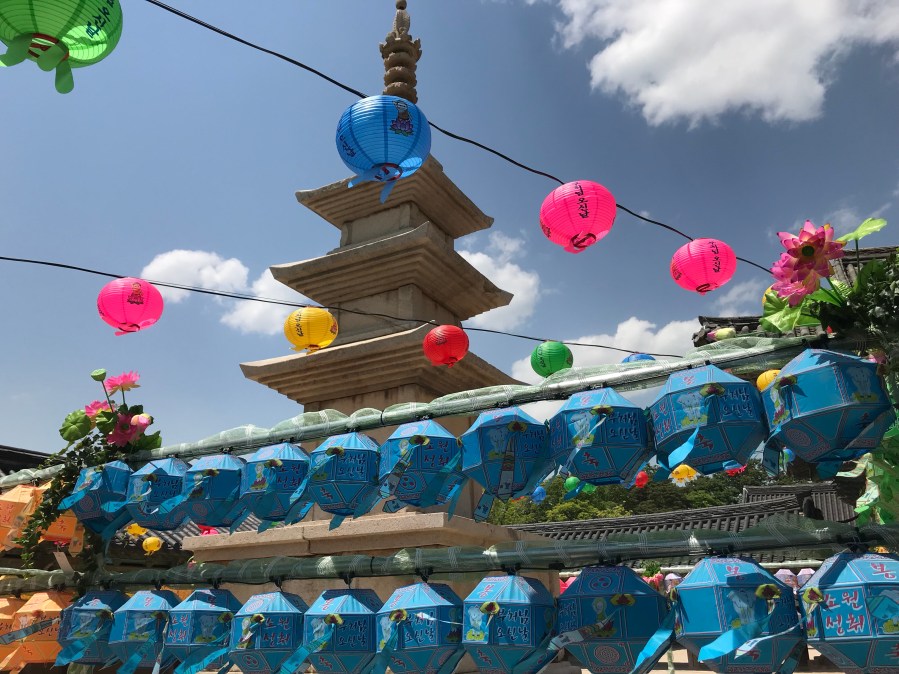
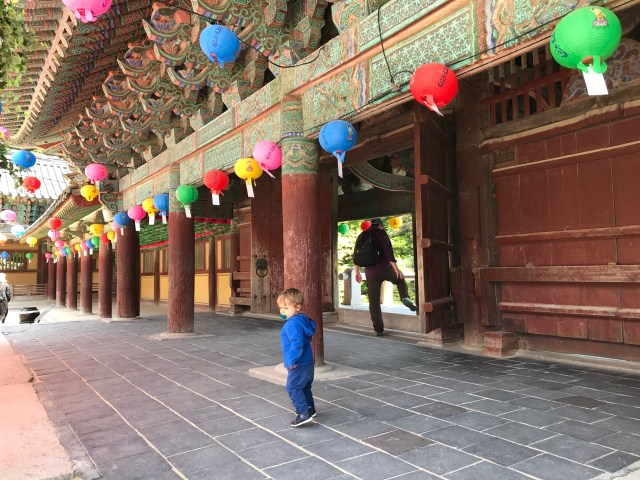
1. Bulguk-sa Temple. You can reach it by bus 10, 11, 12 and 700 departing from the Intercity Bus Terminal. The ride will take about 30 min and costs 1200 won. Best done during the week, when you can admire this beautifully preserved Temple in less company. Otherwise, this Temple is an important landmark for Koreans and foreigners alike, as it encompasses several Korean National Treasures including a Three storey stone Pagoda and the Dabotap Pagoda. When we visited, the whole temple was decorated with coloured lanterns, giving it an almost fairytale atmosphere. Nearby is the Seokguram Grotto, a representative cave temple in Korea.
2. Gyeong ju historic areas: including the Mount Namsam and the Dareungwon Tumuli Park. The park is dotted with the tombs of ancient Shills kings, having the appearance of small green hills. You should not try to climb the tombs. Many of the relics uncovered here are displayed at the Gyeong ju National Museum.

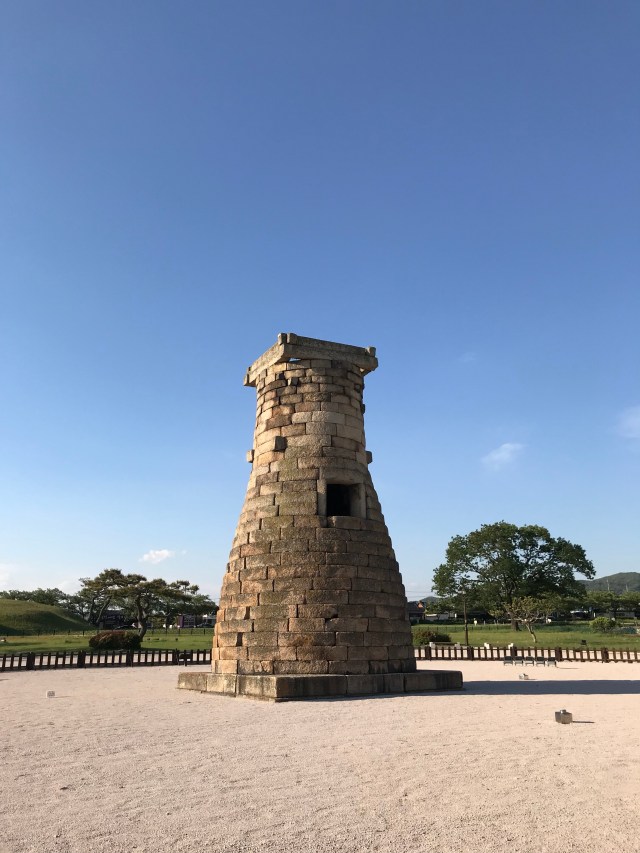
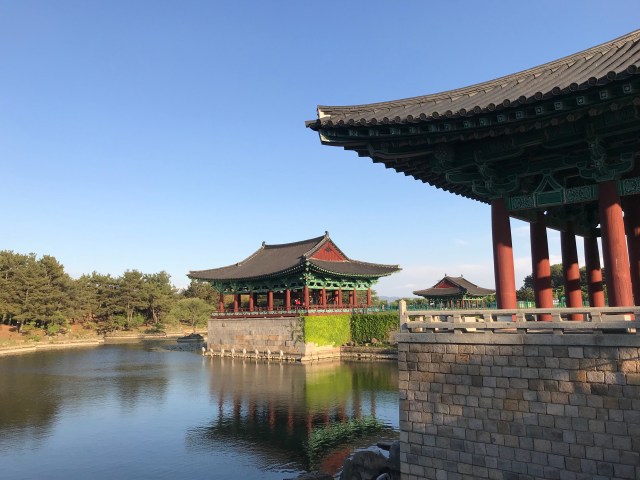
3. Cheomsegondae Observatory and the Donggung Palace. Both sites are close to each other and can also be visited after dark as they are surrounded with light installations. Another special site is the Woljeonggyo Bridge. It is said that this bridge is entirely made of wood, with no nails or other metals. All are accessible with the stroller. The pond at the Doggung Palace is particularly entertaining to little ones as it is the home of several large red fishes that come really close to the shore.
4. Historical Village of Korea. Reachable by Bus 203 and 252, this is yet another UNESCO listed monument. It gives the visitors a glimpse into the culture, customs and old houses of Confucianism and boasts a 500 year history.
The local speciality: ssambap is a meat hot pot accompanied by salad leaves and numerous tiny dishes. Our hanok recommended Byeolchaeban Gyodong and it was a great meal indeed at 18,000 won per person. The waitress was great with our LO and came to play with him a few times. They have high chairs.
After three immersive cultural days in Gyeong ju, we headed to more toddler friendly, sand frolic activities on Korea’s most famous beach: Haeundae in Busan.
The connection between Gyeong ju and Busan Station by train takes not more than 30 min ( and about 10,000 won) Thereafter, the Busan Metro will take you to Haeundae in about one hour (you will change once). Accomodation is plentiful and some hotels have great ocean views. We went for a one bedroom apartment in the Citadines, one block away from the beach. We were looking for the possibility to cook a couple of nights for the LO that was not too keen on Korean food other than the BBQ meat and rice.
Haeundae is all about the beach and relaxing in the sun. There are many ocean- centric activities from sand castle building to a SeaLife aquarium to keep the whole family entertained.

Another less known feature of Busan are its hot springs. For a quick dip, there is a foot bath spring adjacent to the Tourist Info Centre on the main promenade. Other hot springs are part of the Communal Bathing Spas dotted across the city. I tried the Haeundae 24h Spa that occupies several floors in a building behind the Traditional Food Market. No English is spoken and you might be the only foreigner but that just adds to the authenticity of the experience. For 7000 won expect to get completely naked and join a couple of hundred other women in jumping from one hot pool to another. Body scrubs and massages are also available in one corner of the hot pools area. There are also several saunas. I did not take the LO along as I visited early in the morning but there were a few women accompanied by children as young as 2 years. If arriving late at night, you can pay 12,000 won and get to use the pools as well as rest/sleep in the communal sleeping area on the 6th floor. For a larger Spa, with tens of options for pools and Saunas, you can try the Spaland, on the 1st flor of the Sinsegae Mall (Centum City Metro stop) When we visited at the weekend and during a national holiday the queue for Spaland was just insane.
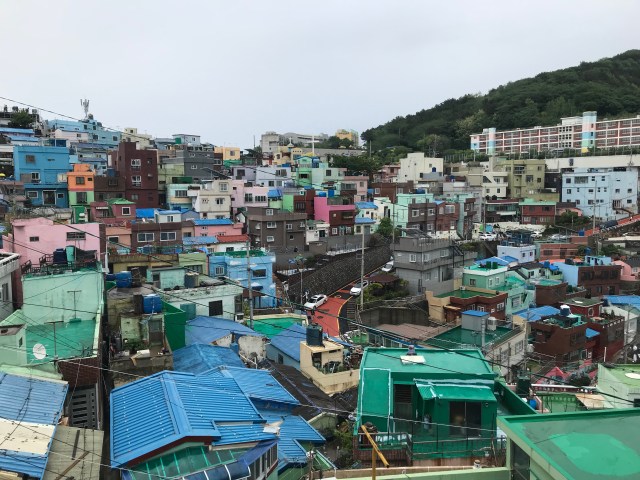
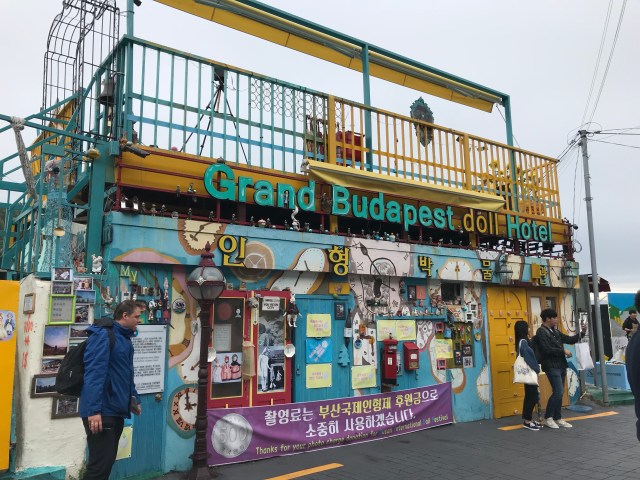
If the weather is good, another unique half day activity in Busan is a visit to the Gamcheon Cultural Village (photos above). Just note that only part of the indicated tour courses are stroller friendly. You can grab a stamp map for 2000 won at the Info centre and ask for information if you have a stroller in tow. Young children will have lots of fun trying to collect all the stamps for the map and running around the narrow passageways. To reach the village, take Bus 2 or 2-2. It stops 50 m from the Metro stop Toseongdong Exit 6.
Last, our favourite BBQ place in Haeundae, recommended by locals, is the O ban Jang ( woo dong S 42-11, Heundaegu). Great marinated pork and beef with tasty sides. We loved it so much we ate there twice. They have high chairs and a very nice terrace.
Next, we will be heading to Jeju Island for more nature walks and UNESCO listed sights visits.
Stay tuned and happy travels!

 Travel Tales and Teddy Bears